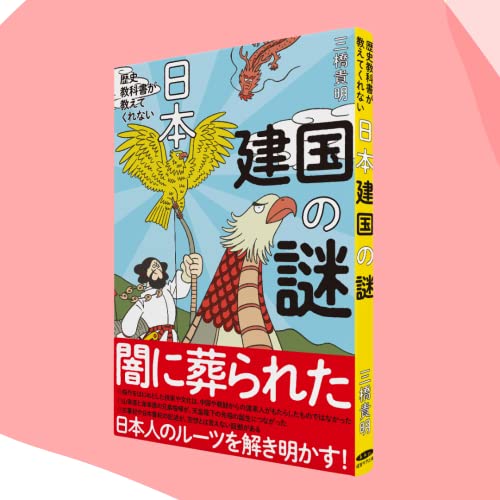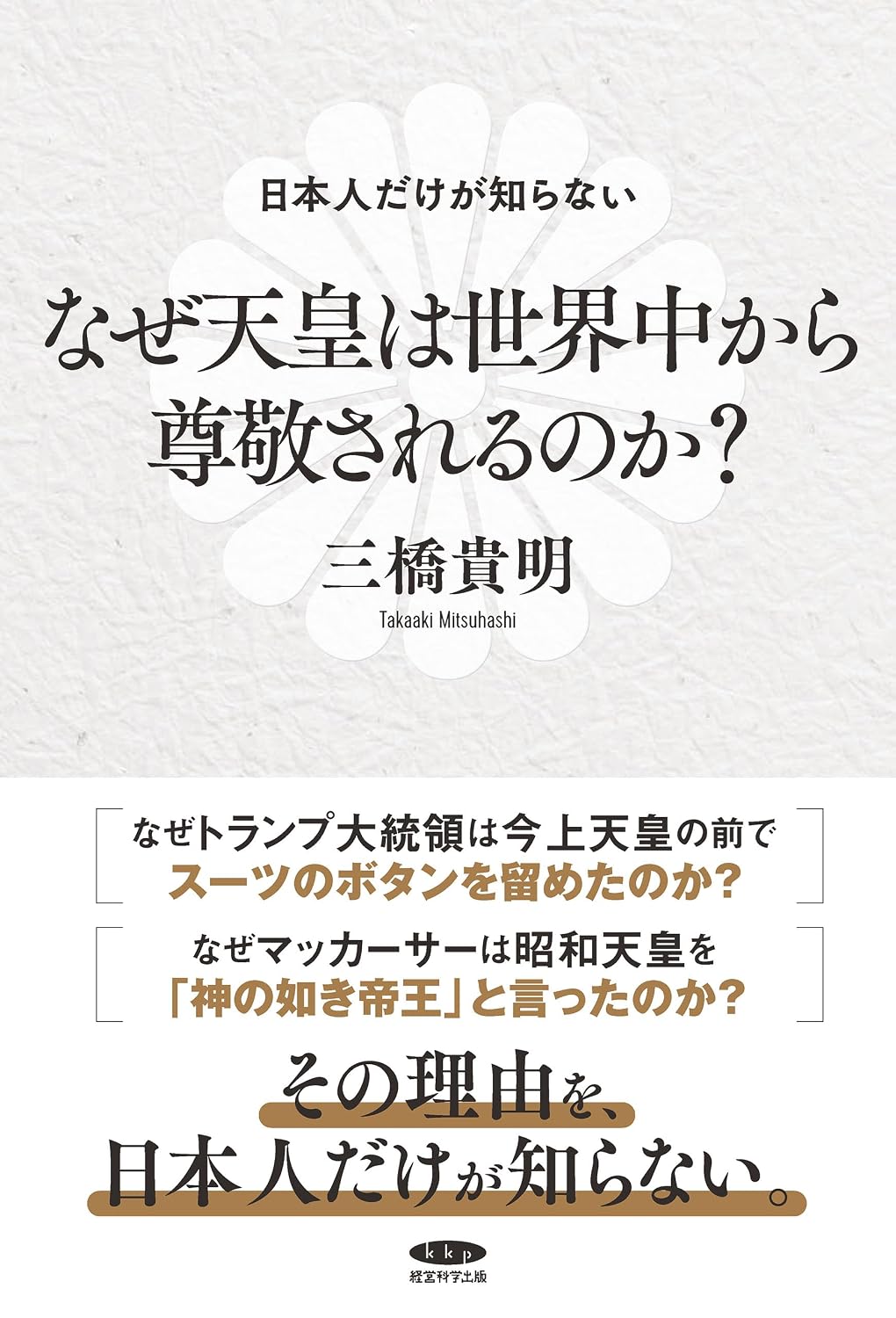
This book discusses the reasons why Japanese emperors have a long history unparalleled in the world, and the imperial line has been maintained until now from the viewpoint of male succession, characteristics of Japanese civilization, and separation of authority and power.
The author first explains that the Japanese imperial family has maintained the imperial line by male lineage. In Europe, when succession by a female line takes place, it is regarded as a change of dynasty, and the name of the dynasty itself changes. For example, although the current King Charles III of England descends from William I's lineage, the name of the dynasty is the Windsor dynasty rather than the Norman dynasty (P9). Looking at it by the male line of succession, Japan alone is positioned as the only nation that has maintained the same imperial line.
The reason for sticking to male lineage succession is not simply to maintain lineage but to protect the identity of the nation (P20). If female succession is recognized, the imperial girl who married a foreign country will also have the right of succession, and there will be room for foreign forces to participate in succession to the throne. In Europe, more than 20 succession wars occurred from the 14th century to the 18th century alone due to this problem (P20). In Japan, a system was established to leave the imperial register when the inner princess got married, and external men were not allowed to become members of the royal family (P23). The author explains that this system is not discrimination against women, and that it is “male discrimination” in the sense that ordinary men cannot become members of the royal family (P24).
Furthermore, we will also focus on the fact that different male lineages have continued to coexist in the Japanese archipelago. The fact that multiple Y chromosome lineages after leaving Africa still remain in Japan indicates the possibility that mass murders of men were not repeated in the Japanese archipelago (P30 to P32). This point is also introduced as a background that supports the continuity of Japanese civilization.
Regarding agricultural civilization, the author also emphasizes relationships with livestock. Farming and animal husbandry developed together in various parts of the world, and livestock was both a labor force and a fertilizer supply source (P38). Humans have increased agricultural productivity by using about 14 types of livestock, such as sheep, goats, cows, horses, and pigs (P39).
However, Japan had its own development. In the Jomon period, jade from Itoigawa was prized as the finest ornaments (P44), and it is also stated that Japanese people are the only ethnic group in the world that “domesticated” koji mold (P47). The fact that fermentation culture of sake, miso, soy sauce, etc. was developed using microorganisms rather than animals is positioned as a symbol showing the uniqueness of Japanese civilization.
The central theme of this book is the role of the emperor. The Japanese emperor does not have a monopoly on property or power like Western and Chinese emperors, and he “prays for the people” (P77). They do not have political power and do not make political decisions, but they have authority backed up by a long history. This structure of “having authority but no power” is the biggest characteristic of the Japanese Imperial Family (P77).
This system was established through system reform by Prince Shotoku. After the death of Emperor Sushun, the political system was drastically reformed, and the “separation of authority and power,” where the emperor bears authority and political power is placed separately, was institutionalized (P113). The author believes that this structure is the biggest factor in maintaining the imperial line until now.
Also, there are many longevity organizations in Japan other than the Imperial Family. Kongo Gumi, founded in 578, is the oldest company in the world, and the majority of the world's thousand-year-old companies are Japanese companies (P79). The author introduces this as proof that Japanese society as a whole has a culture that emphasizes “continuation.”
Regarding the current issue of succession to the imperial throne, the return of the former imperial family to the royal family is presented as a realistic solution. A return to the royal family is possible due to special legislation, and if male boys return to the current imperial family, there is a possibility that they will be able to respond without revising the Imperial Family Code (P143).
Also, in history, there are multiple examples of succession to the imperial throne going back hundreds of years in order to maintain the male line. Maintaining the male lineage has been consistently prioritized, with Emperor Buretsu going back to the male lineage about 200 years ago and carrying out succession (P147).
What the author consistently conveys through this book is that the Japanese imperial family is not a “person in power,” but has existed as a “praying authority,” and that the system of male line succession and separation of authority and power has supported the continuity of the nation called Japan. It is concluded that in order to understand Japanese civilization, it is important to look not only at historical events, but also at the continuity of the systems and culture that have supported them.