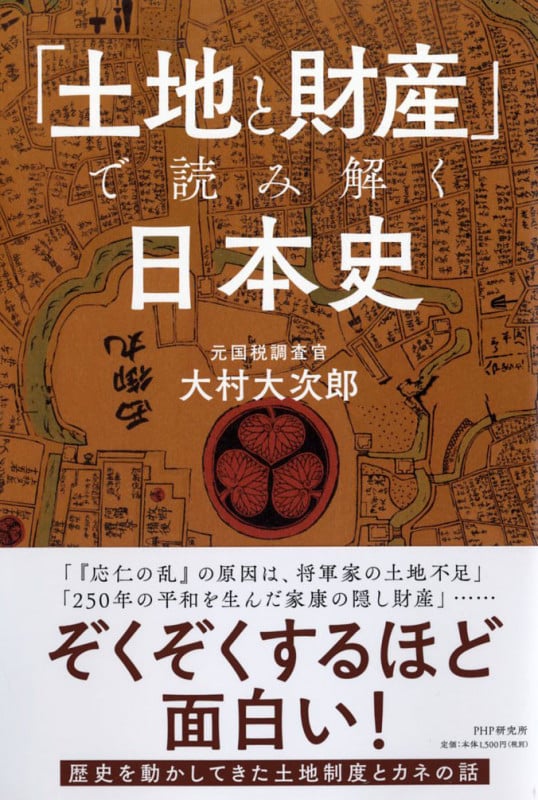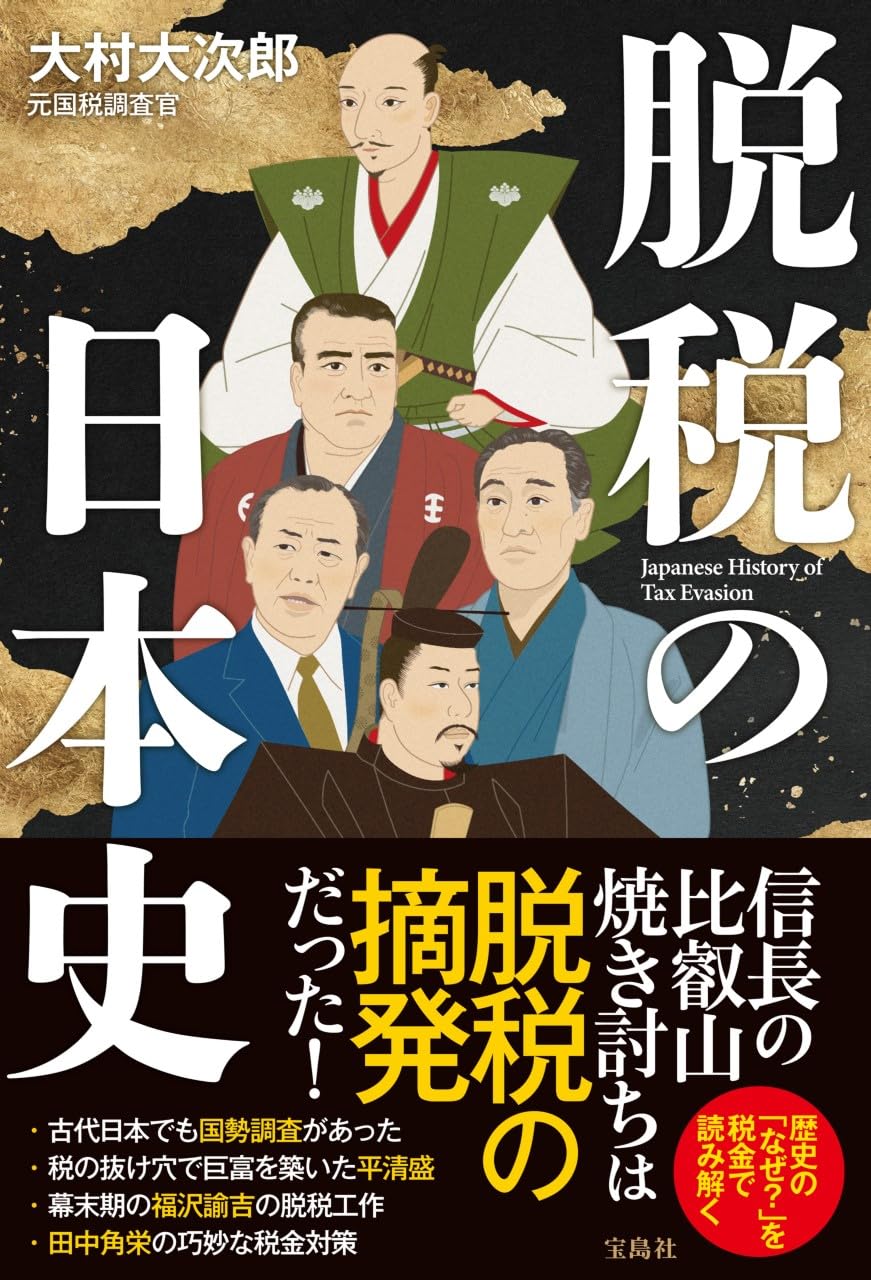
I recently found on the internet that Mr. Omura had written an interesting book the year before last, and now I've read his 47th book, and he explains history from the unique perspective of being a national tax inspector. When I read this book, I was able to feel that the essence of human beings hasn't changed that much even as time has passed, and I was familiar with them.
According to the current sense, “tax evasion” is not good, but I was also able to understand that it was only because of tax evasion that they were able to have economic power, and that they were able to govern regions and eventually Japan. I would like Mr. Omura to continue explaining history from his unique point of view.
Below are the points I was concerned about.
・In Japanese history, the only administration that did not recognize intellectual ownership of land is, in effect, the Yamato administration after the Taika Reform, and the reason why the Yamato administration did not recognize private ownership of land was because it tried to concentrate the financial power of a country distributed among powerful families etc. by nationalizing the land (p17) instead of collecting banknotes from powerful families for the military, it was the Taika Reform that strengthened the army directly under the Imperial Court through conscription (p22)
・Saizou/Kurashi/Okura is a storehouse developed during the time of Emperor Yuryaku; Saizo is a storehouse that stored the emperor's rituals, a storehouse that stored official goods, and a large storehouse is a storehouse containing offerings (taxes) from all over the country (p21)
・If you simply explain the rent system, rent collects rice, rent is labor, and rent collects cloth and specialty products as tax (p30)
・Nationwide land surveys have been conducted in Japan only 3 times in history, and most of the current Japanese land registers, which are Hideyoshi's “Taiko Land Survey,” land tax revisions during the Meiji Restoration period, and Taika reforms, use public maps made during the land tax revisions (p32)
・After the Battle of Hakusunae, the Yamato Imperial Court prepared for advance to mainland Japan by the allied forces of Tang and Silla. Emperor Tenchi moved the capital to Omi-Otsu, which has good transportation, in 667 in order to prepare for war, and the capital of Japan was Omi-Otsu until the capital was returned to Aska after a civil unrest (p43)
・The smallpox outbreak that occurred from Tenpyo 7 (735) to Tenpei 9 had a major impact on Japanese society, and more than 1 million people, or more than 20% of the population at that time, died. There was no medical treatment for smallpox, so there was no choice but to rely on Shinto and Buddhism; Emperor Shomu in Tenpyo 13 ordered the construction of Kokubunji and Kokubunniji all over Japan, decided to build Todaiji now in Tenpyo 15 (743), and what was conceived as a financial resource is the “Keta Nagatsunen Private Finance Law” (p48)
・The number of farmers employed in private fields pioneered by aristocrats and ruling families increased, and karanda (public fields) began to be abandoned, there were conscription and labor services for karanda, but private fields did not have such a heavy role, so there were many farmers who moved to private fields, in other words, farmers “abandoned public fields in order to evade taxes” (p51)
・At the end of the Heian period, court nobles and aristocrats specializing in “martial arts” appeared, and a major reason for this was that the banden collection system was broken, family registers were not revised in the middle of the 9th century, and banden collection almost ceased to be carried out in the 10th century (p69)
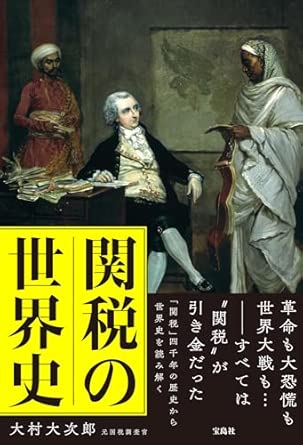
・In foreign trade in the Heian period, there was a national exclusive right to purchase, and this was stipulated in a law called the Seki City Ordinance, and “when a trading ship comes in from a foreign country, officials were dispatched from the Imperial Court, and the nobility and approval first bought the rest,” and that right was a modern “tariff,” and in the latter half of the Heian period, surveillance by the Imperial Court loosened, and sometimes the aristocrats bought remarkable things first, I was evading customs duties, so to speak (p73)
・Taira no Kiyomori tried to control the samurai families within the imperial court system, and his attitude was that control of the land lay with the imperial court and the central aristocracy, and that samurai families in various places were simply entrusted with land management by the imperial court and central aristocrats, while Minamoto Yoritomo recognized land ownership and tax collection rights to the samurai families and tried to free them from control with the imperial court and the central aristocrats, so he succeeded in obtaining instructions from the samurai families and was able to lead an army that surpassed the soldiers That (p79)
・In 1185, Minamoto Yoritomo said, “I want to secure military provisions for the battle against the Taira clan,” and the Imperial Court recognized the establishment of a shugo and the “right to collect military provisions,” and this right actually has huge financial significance. Rice was something that could be paid as tax, so having the right to collect military food was the same as having the right to collect tax (p81)
・Minamoto Yoritomo had acquired the right to reward and punish samurai families from the Imperial Court, and this right was an important one that can be said to be the foundation of the Kamakura Shogunate; Yoritomo was able to hold the country's military power in one hand; each samurai family established loyalty to Yoritomo rather than the Imperial Court; that was the source of power of the Kamakura Shogunate, and for that reason Yoritomo prohibited each samurai family from directly contacting the Imperial Court, his younger brother Yoshitsune destroyed this serious premise, Yoshitsune and the proximity of the Imperial Court was the biggest reason for Yoshitsune's murder (p84)
・Land at the end of the Heian period was dispatched from the Kamakura Shogunate, where manors and duchy territories were scattered, even though manors had expanded, there were still quite a few public territories left, “kokushi,” which is a position like the current governor, and “kokuga” was placed in each country to protect public order because security was disturbed, and “shugo” was placed in each country to protect public order, so it is the so-called royal family, and shugo not only protects the security of each country, They also had the right to inspect land and collect military provisions. Meanwhile, jito is a family member of the shogunate who was dispatched to the manor, formally granted the right to manage land to tax evaders who had privately owned the manor until now, and the jito became the manager of the manor in place of the shogunate (p87)
・The Kamakura Shogunate did not create a new administration by overthrowing the administration (Imperial Court) up until then; the “shogunate,” which was just one agency of the Imperial Court, came to take charge of politics in an unruly manner; in the first place, the shogunate means “temporary headquarters” (p88)
・The Kamakura shogunate did not have tax collection power or administrative power for the whole of Japan, and samurai families from all over the country collected taxes and administration, and the shogunate only had the right to supervise and arbitrate. The financial resources of the Kamakura Shogunate were nothing more than taxes obtained from land under direct control and tariffs due to trade (p89)
・The Kamakura Shogunate had two types of territory; one was called the “Kanto Gobun Province,” and depending on the season, Totomi, and Mutsu also entered, and the other territory was controlled through the Kokuga, which was a transformation of the system that had continued since the ritsuryo period, and the shogunate managed the land of the imperial court before it was built; Suruga, Musashi, Sagami, and Echigo were always “Kanto Imperial Palace,” and depending on the season, Totomi, Izu, and Mutsu also entered, and the other territory was “Kanto Imperial Palace.” It is called, and Minamoto Yoritomo, which is a manor owned by the shogunate, which is under the direct control of the Kamakura shogunate, was given 500 former territories of the Taira clan by the Imperial Court; the Kamakura Shogunate only ruled over a dozen countries from a few countries centered around the Kanto region, and Japan as a whole was ruled by local ruling families in each region (p90)
・If you look at the cause of the Onin War from a tax point of view, it is because the financial strength of the Muromachi Shogunate was too weak, there was a period called the Northern and Southern Dynasties period, which was launched as an opposition force against Emperor Godaigo's parent government after the collapse of the Kamakura Shogunate, so when disputes broke out within the Ashikaga administration, those that quickly became opposition forces to step down and were complicit in the southern dynasty. The Ashikaga administration reduced the direct control of the shogun family in order to stabilize the existence base of the administration They tried to attract vassals, and as a result, the Ashikaga family itself had very few territories under its direct control (p92)
・The reason why temples and shrines had large land is tax evasion; since ancient times, temples and shrines were exempt from rent, so many people escaped taxes by donating to temples and shrines (p98)
・Nobunaga even issued a certificate saying, “If it is inconvenient for either Asakura or Asai to be complicit in Mt. Hiei against Mount Hiei, it is enough to just protect neutrality, and if you do that, you will return the former territory of Mt. Hiei,” Nobunaga was furious, and when the battle with Asakura ended the following year, he burned down Mount Hiei, and when the battle with Asakura ended the following year, Nobunaga initially confiscated Mount Hiei's manor, even before Mt. Hiei was complicit in Asakura They had a tough stance against Mt. Hiei, and that's why Mt. Hiei rebelled against Nobunaga (p101)
・Nobunaga has carried out bold farmland reforms and is carrying out “big tax cuts” against the people of the domain, and is likely to persecute temples and shrines, but Nobunaga's policies adhere to the guidelines of “suppressing those that evade taxes and those that take taxes without permission, and lighten the tax burden on the people of the domain as much as possible” (p105)
・At that time, Mt. Hiei for sake, Gion-sha for textiles, Kitanosha for koji, Nanzenji for oil, etc. had a large market share; in 1419, the shogunate prohibited self-manufacturing of koji and required that all koji be purchased from Kitanosha; in 1444, this monopoly state was finally lifted due to an appeal from Mt. Hiei; Kitanosha was originally a branch temple of Mt. Hiei; Mt. Hiei set up checkpoints to take expensive toll taxes; Nobunaga set up checkpoints to break the vested interests of temples and shrines “Rakuichi Rakuza” and “the abolition of checkpoints” were carried out (p115)
・Takeda Shingen lagged far behind Nobunaga, and as one element of anxiety, farmland was poor, and second, the Takeda domain was an “isolated island on land,” and since they had to go through land routes, if they were hostile with surrounding feudal lords, the distribution of goods would stop, and they were unable to grow economically because they had these two handicaps (p117)
・For feudal lords, nengu can basically only be obtained from territories under their direct control; nengu of vasses' business value belongs to vassals; “Munebetsu sen,” which Takeda Nobutora began taxed everything within the territory, and even requested temples and shrines that had been exempt from nengu until now (p120)
・Regardless of field battles that can be overcome by a large number of people, lack of equipment clearly showed up in the case of siege battles requiring many weapons such as guns and gunpowder, etc., and this is the reason why Takeda Shingen took 1 month to capture Noda Castle, and in turn, the biggest reason why Shingen was unable to advance to Kyoto (p132)
・Farmland nationwide was measured for land tax reform in the Meiji period, and according to records from the Edo period, it was found that the harvest amount in Japan was 32.22 million koku, but in fact there were 46.84 million koku, and the actual stone height was 1.5 times the nominal amount, in other words, there were quite a few hidden fields (p144)
・Every time the samurai atoning was written off (Kyoho, Kansei, Tenpo), the shogunate made special loans to banknotes (moneylenders) to prevent financial instability from occurring (p148)
・One of the reasons why the shogunate did not impose harsh taxes is that there are money minting profits, the feudal domains that had a monopoly on minting money in the Edo Shogunate were unable to mint money, and if permission was obtained from the shogunate, they were able to issue regional currency that can only be used by domain territories (p151)
・The new tax rate determined by the land tax reform was 3% of the land fee, and this 3% was set at about 34% of the average price before harvesting, which was a burden ratio equal to or slightly lower than nengu in the Edo period (p167)
・The tax rate throughout the country became uniform due to the land tax reform, and although the burden was reduced for most farmers in Japan, the burden increased for farmers in the shogunate territory, and most of the peasant uprisings that occurred immediately after the Meiji Restoration were in the former shogunate territory (p168)
・Although not well known, Japan achieved ultra-high growth before the war. In the 70 years from the Meiji Restoration to World War II, Japan's real GNP increased 6 times, real wages increased 3 times, real industrial production 30 times, real agricultural production 3 times, and it can be said that it was a big growth compared to other countries (p170)
・From Meiji 43 (1910), a method for determining the price of land rent based on the rental price began to be adopted, and after the war, land tax was superseded by local tax and named “fixed asset tax” (p171)
・In Japan before the war, indirect taxes such as alcohol tax and sugar tax, government revenue (mainly tobacco) were the pillars of tax revenue, and direct taxes such as income tax were not very high until the war began (p182)
・Shares in zaibatsu groups owned by post-war zaibatsu families were forcibly spit out into society, were forcibly sold on the stock market, were offered and sold, the price did not go into the zaibatsu family, and most were collected by property tax (p201)