In April 2025, three months after Mr. Trump returned to the presidency of the United States, he suddenly unilaterally declared that tariffs would be raised substantially for all countries, and high tariffs would be imposed on countries with large trade deficits. I have seen various comments, such as Japanese companies' exports being reduced, and American citizens will eventually be responsible for it.
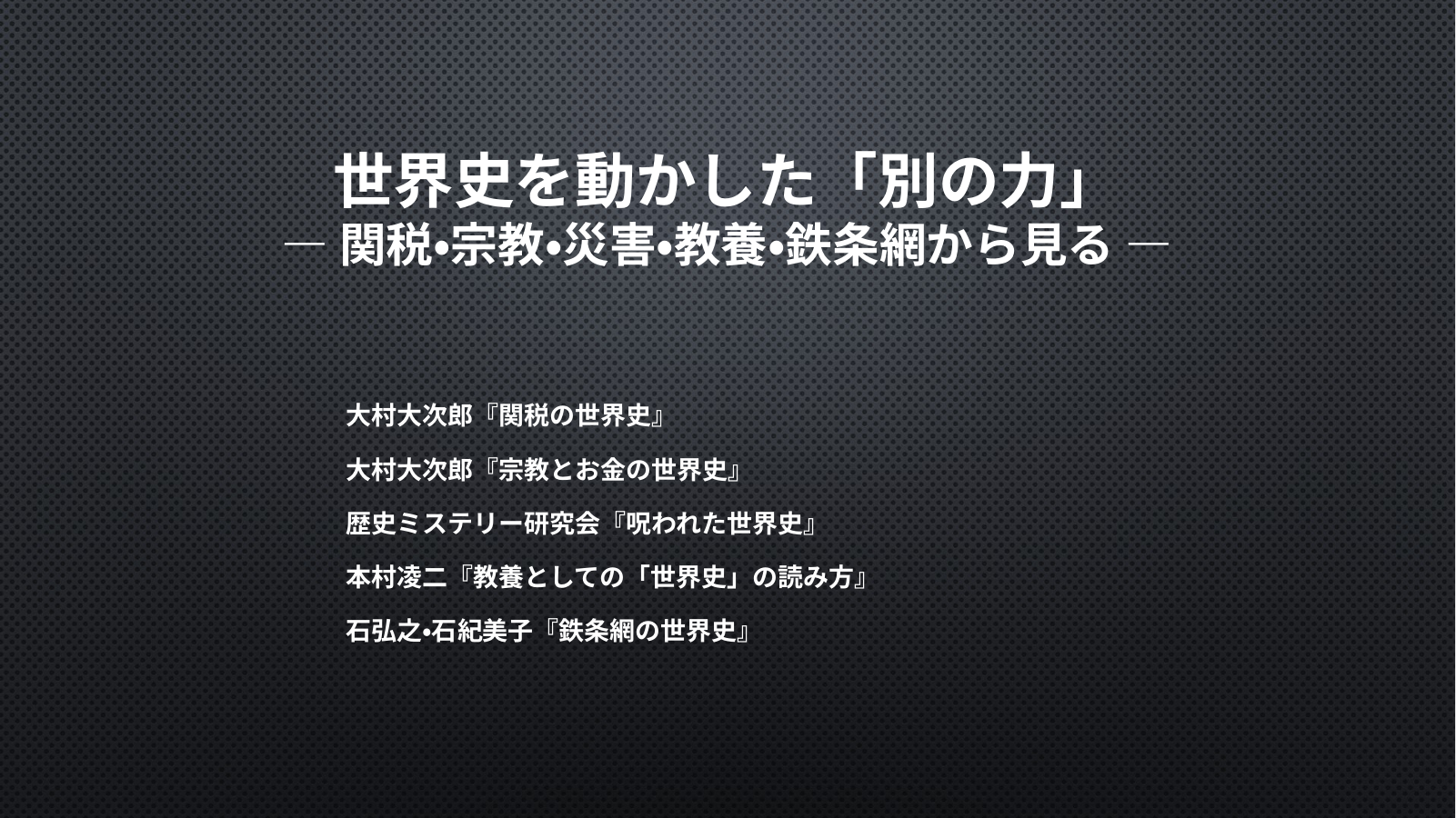
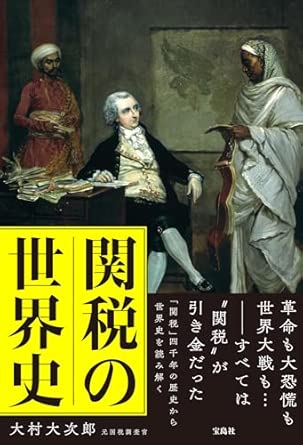
However, I was surprised by the content of the comment written in this book, “The United States has developed by doing free trade until now, but the complete opposite of that has been implemented,” and it was also described that raising tariffs was a means close to declaring war in the old days.
It was also explained why Germany and Japan took measures to cause war, and it seems that tariffs are greatly involved. The fact that America is demanding high tariffs on each country is probably affecting the US and Japanese government bond markets and gold prices. After all, I felt that an era was about to turn.
Below are the points I was concerned about.
・The Mongol Empire had already succeeded in introducing “pioneering tariffs,” such as the prototype of current tariffs, trade developed dynamically if tariffs were imposed only once, it was something that was pleasing to both merchants and the public, since the price of things could be reduced, and a global distribution revolution occurred (p32)
・Spain and Portugal somehow sought a way to trade with Asia without going through Ottoman Turkey, and what they ended up with was a “great voyage” to avoid Ottoman Turkey and directly trade with Asia (p37)
・The Ottoman Turks, which saw the development of routes between Spain and Portugal, have also taken new steps, and in 1535 they formed a partnership with France and granted trade privileges. This meant that when French merchants did business in Ottoman Turkey, extraterritorial jurisdiction, personal tax exemption, and freedom of movement of property and residence were recognized. The reason why France, a Christian country, partnered with Ottoman Turkey was that France was hostile to Spain at the time. A similar treaty was signed with England and the Netherlands, and as a result, France, England, and the Netherlands were able to obtain perfumes at a much lower cost than Spain and Portugal (p39)
・The Ottoman side's consideration that the Ottoman side does not have jurisdiction over merchants, and the Ottoman side does not change tariffs without permission led to Western powers “recognizing extraterritorial jurisdiction” and “not recognizing tariff autonomy” (p40)
・War and religion are major reasons why Spain, which had colonies all over the world and brought in huge amounts of gold and silver from the American continent, has deteriorated so much financially. Spain was in an area bordering the Islamic world, and it recognized itself as a Christian stronghold, so skirmishes were constantly repeated with the Islamic world. Maintaining an invincible fleet alone was expensive (p51)
・Spain relies on a tax called “alcabala” to resolve habitual financial difficulties. Alkabara, which seems to be the biggest factor in Spain's decline, is a tax that combines tariffs and consumption tax, and was brought in from the Islamic region in the Middle Ages. When an item is brought in from outside of Japan, it is taxed, and every time the brought in goods is traded domestically, it was further taxed, that is, taxes were levied on one item many times (p52) prices rose as a result and the economy was sluggish, and this price increase is presumably due to large amounts of silver flowing in from the American continent, but in fact, it starts before the influx of silver, and prices rise compared to other countries It became expensive and difficult to export, and on the other hand, cheap imported goods were sold domestically, and the balance of payments deteriorated (p57)
・ “Mercantilism,” which was popular in the 17th century, called for saving only gold and silver. This idea escalated, and there was even an assertion that purchasing consumer goods with gold and silver is ridiculous; this is because gold and silver are valuable in the future, but the value of consumer goods will decrease, and in France, tariffs were raised drastically based on this idea. This is because when tariffs were raised, the partner country would become angry and could not export, leading to a deterioration in relations with the Netherlands, leading to the Franco-Dutch War of 1672 (p64)
・When America was an English colony, almost no taxes were levied, because North America was not that important as a colony at that time. The importance level was low compared to South America, where there were large gold and silver mines, and East Asia, where valuable perfumes were harvested (p70)
・After winning the Revolutionary War, the US federal government used tariffs as the main financial resource; they wanted to protect American industry and secure tax revenue by raising tariffs to a high level; tariffs were responsible for 90% or more of financial resources for 100 years after the nation was founded; however, many farmers in the southern states used cotton exports to England as the main source of income, and when America raised tariffs, England also raised tariffs in retaliatory manner Farmers would be hit, so the South fiercely opposed the increase in tariffs, and finally, 11 southern states declared withdrawal from the United States of America in 1861 (p84)
・The Qing began to borrow large sums of money from Europe and the United States after the Opium War and surrendered Shanghai customs to Europe and America as collateral for that debt (p91) After surrendering customs to England, France, and the United States, and true government tariff revenue increased after returning, English, French, and American officials exactly paid the balance after deducting loan repayments and treatment expenses to the central government of the Qing dynasty, and there were many aspects that the central government was thankful for (p93)
・ Thailand's territory until the 19th century also extended to Cambodia, Laos, and Malaysia, but it was eroded quite a bit by England and France. By 1909, Thailand had ceded 460,000 km2 of the area it controlled, and previously it had doubled its land area. At that time, Asian countries were in a situation where they would become colonies or their territory would be eroded (p94)
・Europe and the United States were allowed unlimited exports to countries without tariff autonomy, and when the price could not be paid, the great powers demanded various benefits. Just as Shanghai's tariffs were seized by Europe and the United States, in addition to tariffs, there were times when Asian countries required mine/port rights, territorial cession, etc. in addition to tariffs (p104)
・Since Japan did not have tariff autonomy, it was not possible to suppress imports due to tariffs, but exports commensurate with imports were possible, in other words, Japan had strong export output from the beginning of its founding, and that was raw silk (p195)
・It was after World War I that Thailand was able to have tariff autonomy; in the case of China, it was 1928. It was after World War II that other Asian countries were able to have tariff autonomy in the true sense of the word. Most of the Asian countries were Western colonies until World War II, and in effect, they were incorporated into the sphere of influence of the Western powers, and there was no proper trade (p112)
・Before the war, American-made automobiles dominated the Japanese market, so Japan set high tariffs on imported cars. American automobile manufacturers built assembly plants in Japan, etc., and American cars have always had a monopoly on the Japanese automobile market. The Japanese government, which bogged down the business, forcibly locked out American cars by further raising tariffs and effectively banning assembly plants in Japan, etc., which became one of the factors that worsened Japan-US relations (p119)
・Japan created a law called the Automobile Manufacturing Business Law in Showa 11 in order to develop domestic manufacturers, and this law was effectively “only domestic automobile companies can manufacture and sell in Japan,” and it was a much stronger exclusion policy than the current American tariff policy, etc., and by further raising tariffs, Ford and GM greatly impaired the flavor of local production and withdrew one after another (p126)
・In Japan, raw silk, which is the raw material for silk, has been the main export force since the opening of the Edo period. Among them, the Japanese industry realized that it was more profitable to manufacture and sell silk and noodles rather than selling raw silk, and the spinning industry gradually developed (p133)
・The United Kingdom was robbed of the cotton products market by Japan in India, and the United Kingdom, which was in a hurry, implemented import regulations = block economy as a hardline measure; India enforced license protection laws in Showa 5 (1930) April in response to requests from the British government, and imposed 15% tariffs on British products and 20% tariffs on cotton products and 20% tariffs on products from other countries (p138) Japan, which was locked out of the Indian market, sought an outlet from Manchuria for that outlet It became (p140)
・The poorer people who consume most of their income, the higher the tariff burden ratio, so tariffs widen the gap between rich and poor, so tariffs were reduced and a “income tax” imposed mainly on the rich was established (p152)
・America made a lot of money in World War I, but when the war ended, arms suddenly disappeared, European countries were exhausted by the war and were unable to import American products in large quantities as before, and America, which felt a sense of crisis about this, set out a policy “high tariff policy” to lock out imports from foreign countries in order to consume its own products in its own country, and did not let America, which became the richest person in the world, buy a lot of things Even though it didn't happen, the economic conditions of all European countries deteriorated greatly since America closed imports (p155)
・America did not increase the amount of currency even though gold was flowing in, gold flowing in after 1922/8 was not included in the Federal Reserve Bank's gold reserves, then America's international competitiveness did not drop even though a large amount of gold came in, America's trade surplus increased more and more money flowed in (p157)
・America, which plunged the world into the Great Depression, implemented policies that further increased the damage, enacted the Smoot Hawley Act, drastically raised tariffs on about 20,000 items on American imports, and countries that exported to America were hit hard. Countries around the world raised tariffs to deal with this, and because of this, world trade shrank drastically, and the economies of countries around the world were in turmoil and exhaustion (p161)
・Most of the Nazis' territorial expansion policies until England and France declared war were land restoration of the former German Empire or annexation of German-speaking regions, and this Nazis' policy did not receive much international evacuation at the time (p172) The reason Germany did such a thing was to counter the Anglo-French block economy (p176). In fact, Nazi Germany at the time was instructed in some way from the Eastern Europe/Central Europe/Latin America window In the international economy at the time, the Nazis had the character of being a spokesperson for “things you don't have” (p181)
・After the Great Depression, England and France established a block economy, which created a large number of unemployed people, so America promoted free trade, and in 1945, the year World War II ended, England sought a loan of 3.8 billion dollars from America. America sought the dissolution of the British bloc economy in return for that loan, and so did France (p195)
・As for the international economy after the Second World War, America took the lead, and an international treaty called GATT was created based on the philosophy that “the closer the tariff is to zero, the better,” and this has now been carried over as a basic rule of the WTO. Myths about this rule, 1) tariffs are as low as possible, 2) only one tariff must be set for one item, tariff rates must not be changed depending on the partner country, 3) exports must not be restricted without reason (P196)
・ In 1971, America collapsed its promise of an impression of the dollar and gold, and due to America's trade deficit, the outflow of money continued, and promises of exchange with gold could not be kept, and Japan was the biggest cause. A uniform 10% surcharge was imposed on imported goods in order to reduce imports, and this can be said to be a factual tariff (P207)
・After World War II, Germany's Ruhr industrial zone was jointly managed by the Allied Powers and countries neighboring Germany, and what was proposed by France at that time was the European Community Plan. It was a proposal to integrate the steel and coal industries of the six countries of France, West Germany, Italy, Belgium, the Netherlands, and Luxembourg, and it was also intended to jointly manage the German Ruhr industrial zone in these 6 countries. France and Germany have said “we will co-manage by ourselves in the future,” so the United Kingdom and the United States were forced to withdraw because there was no morality involved (P233)
・If America were to reduce its trade deficit, the US dollar would be withdrawn from the world; trade volume is expanding around the world and demand for the US dollar, which is the settlement currency, is extremely large, and if the circulation volume of that dollar decreases, world trade will shrink (P259)
・It sounds good when it comes to trade surpluses, but the point is that the wealth of one country is taken out, and the currency of another country is simply accumulating as a cost, the accumulation of other countries' currencies does not enrich one's own country, but only boosts prices in one country; Japanese export companies exchange dollars received as compensation for yen, so Japanese yen increases and prices rise by that amount, and there is no benefit for citizens (P265)