・The fact that the class system of Shinro, Commerce, and Industry collapsed is that it is thought that the activity and vitality possessed by the people, that it is extremely rare that such complete class denial was achieved in a short period of time and under the agreement of many citizens (p14) The fact that a proposal to abolish racial discrimination was proposed to the League of Nations was also reflected in the consciousness and experience of Japanese people who achieved the abolition of domestic classes during the Meiji Restoration (p15)
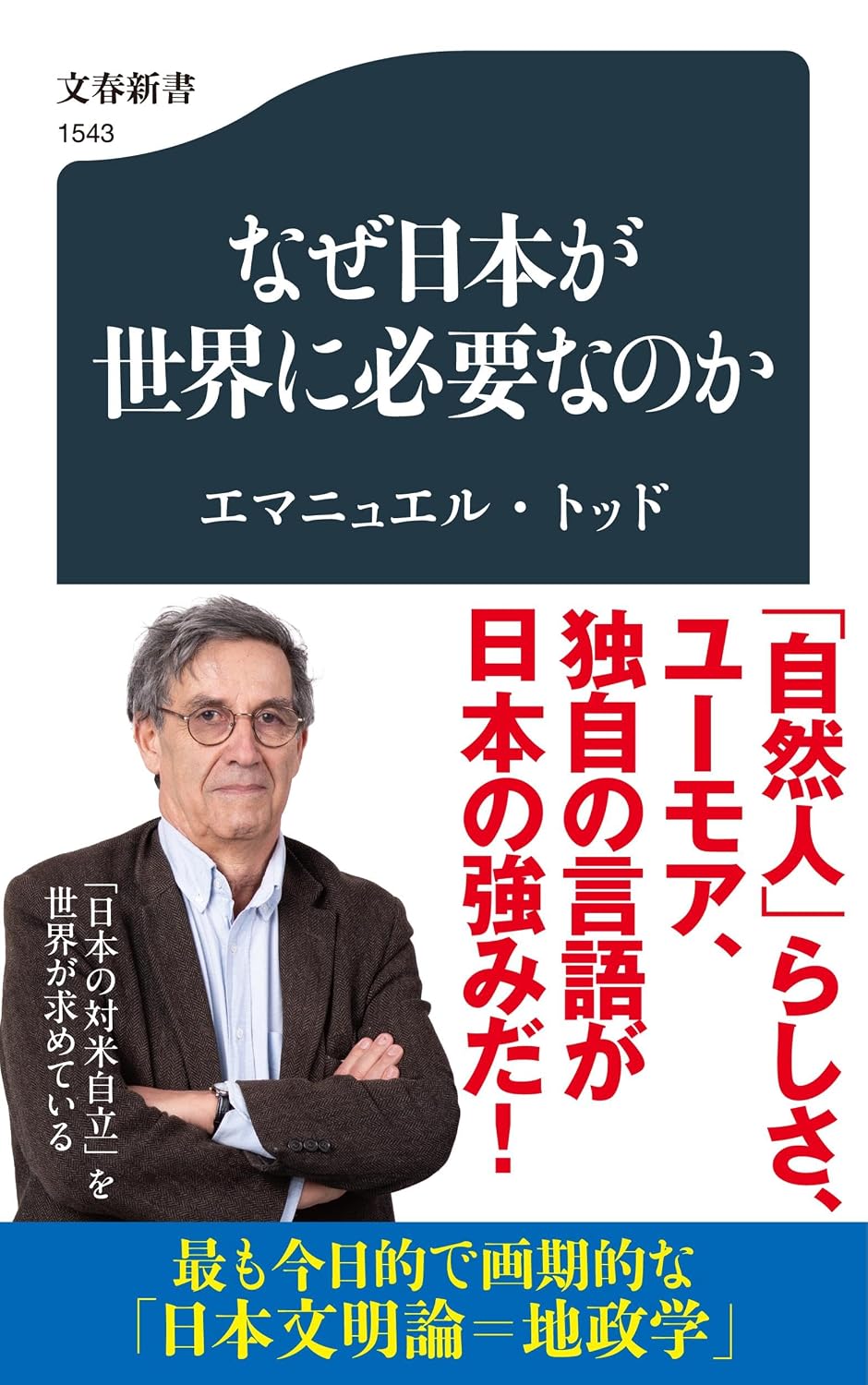
・Ise-jingu Shrine, which can be said to be the head temple of a shrine, is a Shikinen Sengu once every 20 years, and the old shrine of the inner and outer shrines at the center is destroyed and replaced with a new shrine; daring to destroy the old one once every 20 years and build a new shrine next to it; it can be demolished and remodeled after a certain period of time; this kind of example is something I've never heard of in countries other than Japan, even around the world (p19)
・The reason for Japan's high economic growth is due to the fact that under the Cold War between the United States and the Soviet Union, Japan, which is located in geopolitically important Asia, enjoyed a support environment “made to wear clogs” called the super depreciation exchange rate of the yen due to the hegemonic power America at the time (p22, 165)
・From the latter half of the 1980s to the early 1990s, the Japanese economy boasted unprecedented prosperity and took the world by storm; for America at that time, Japan was gradually transforming economically from a competitor to a “threat” when it was an “anti-communist stronghold,” and America used strategic and institutional methods to weaken the Japanese economy over the long term, not simply diplomatic pressure, to non-tariff barriers such as economic systems, regulations, accounting standards, etc. Through criticism, they adopted a thorough anti-Japan strategy that made full use of soft power (p31)
・In the Tokyo trial, it is still being said that Judge India Pearl, who was dispatched by the Allied Powers, insisted that all the defendants were not guilty, saying that this trial was illegal and it was impossible to recognize it. According to the law after the fact, acts prior to its enactment were judged retrospectively, and that the mass murder of ordinary people due to the Hiroshima and Nagasaki atomic bombs carried out by the Allies was not written in the judgment at all (this was pointed out by lawyers against Japan during the trial), etc. (p36) However, Japan returned to the international community by apologizing for this trial in the 1952 San Francisco Peace Treaty It was decided to do it (p36)
・The “enemy clause” in the United Nations Charter is an extremely unnatural provision stating that UN member states do not require special procedures when carrying out sanctions, including the use of force, against former Axis countries in World War II, and it is a discriminatory provision under international law (p43)
・As clearly stated in the International Maritime Convention, EEZ (exclusive economic zone) is not a high sea, it is a sea area where certain sovereign rights have been recognized, and investigation acts without the consent of the coastal country are illegal (p60)
・Japan during the period of high economic growth in the 1960s drew a blue print of the future of Japan based on clear national goals such as the Tokaido Shinkansen, the Tokyo Olympics, and the development of the national expressway network, and moved the country towards it. There is a possibility that Japanese politics can return to its origin by setting up the cause of a “maritime power” again now that it is not profit guidance to electoral districts, but whether or not it contributes to the growth of the nation as a whole was the main axis of political judgment (p75)
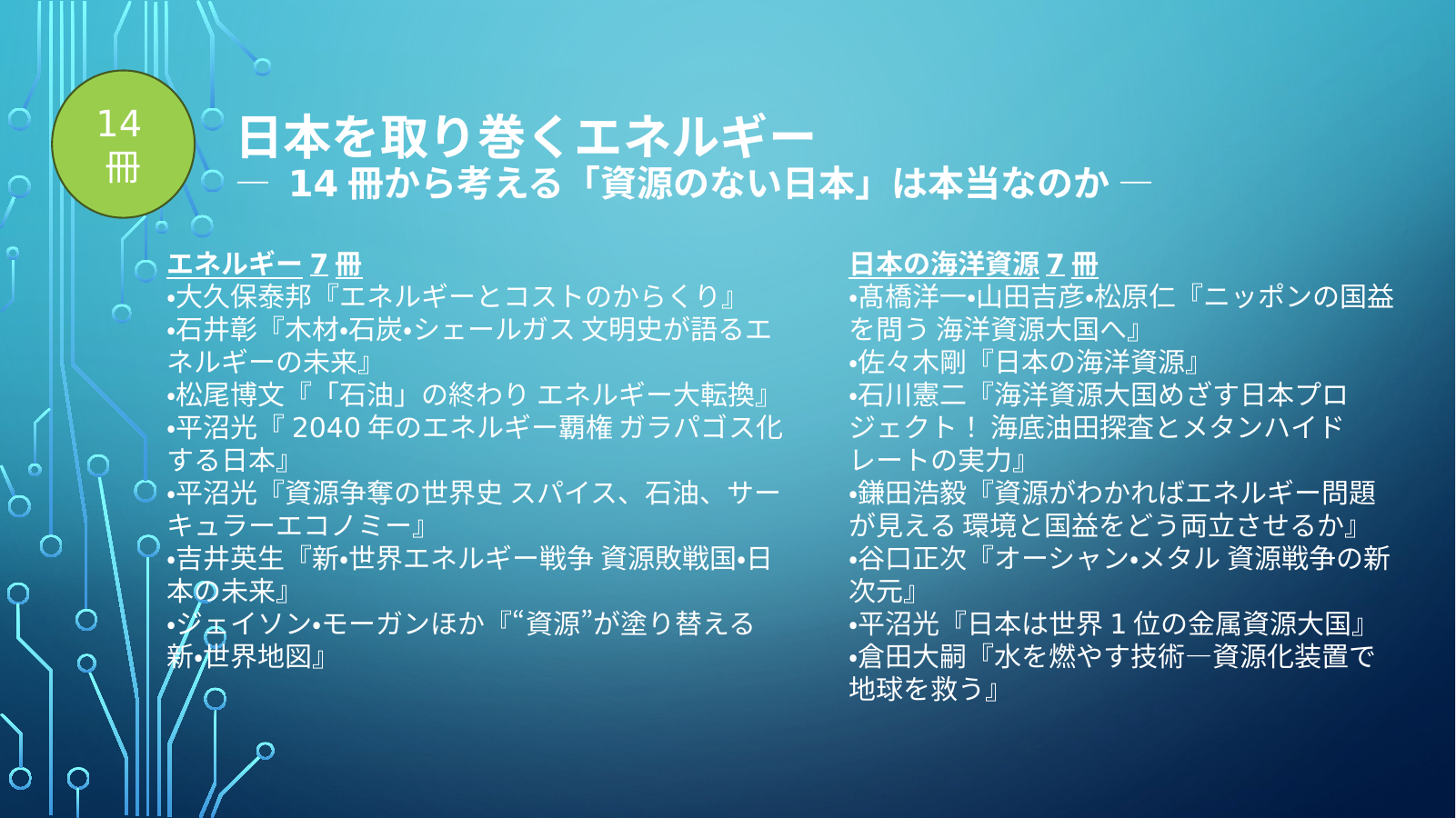
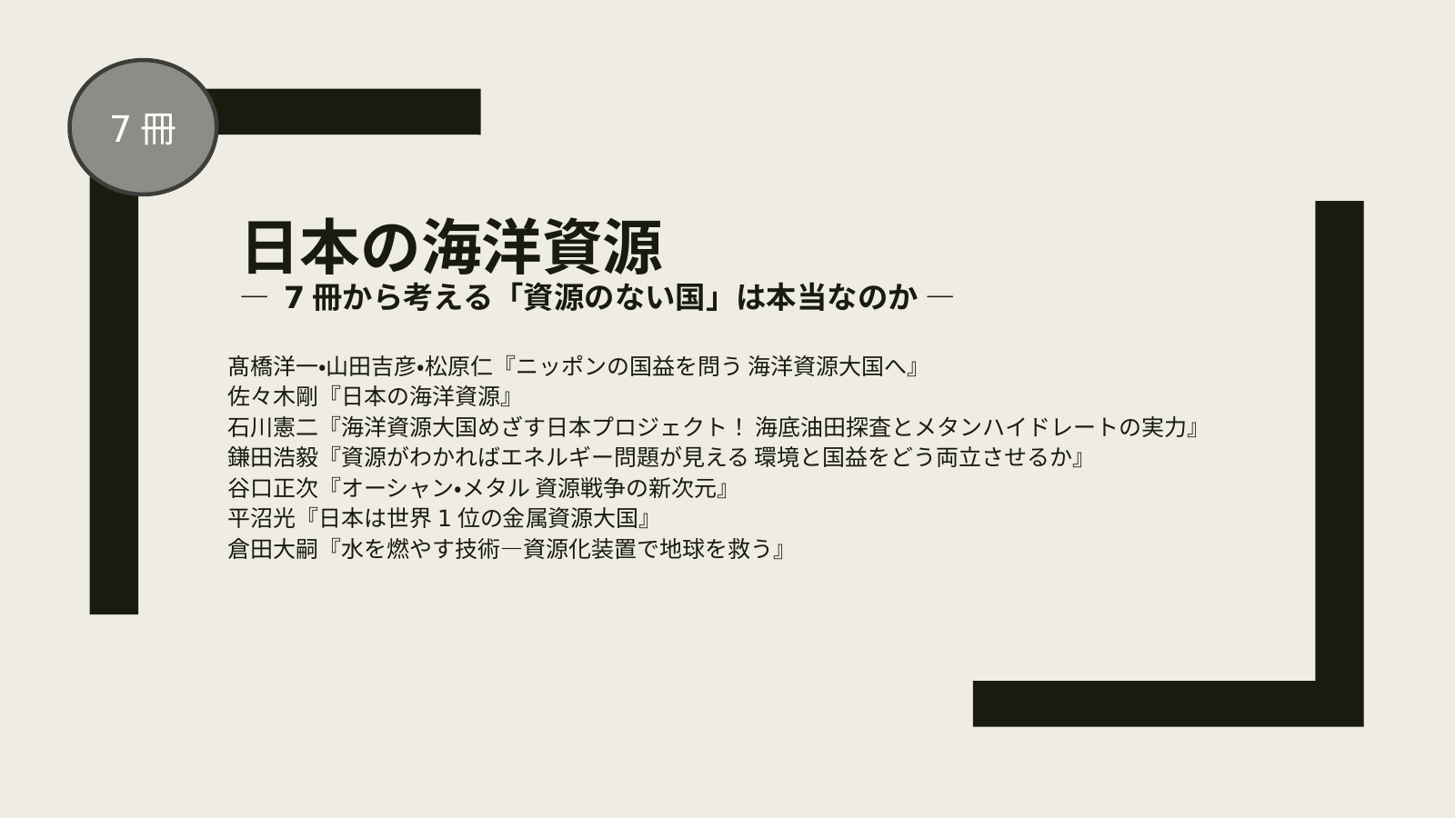
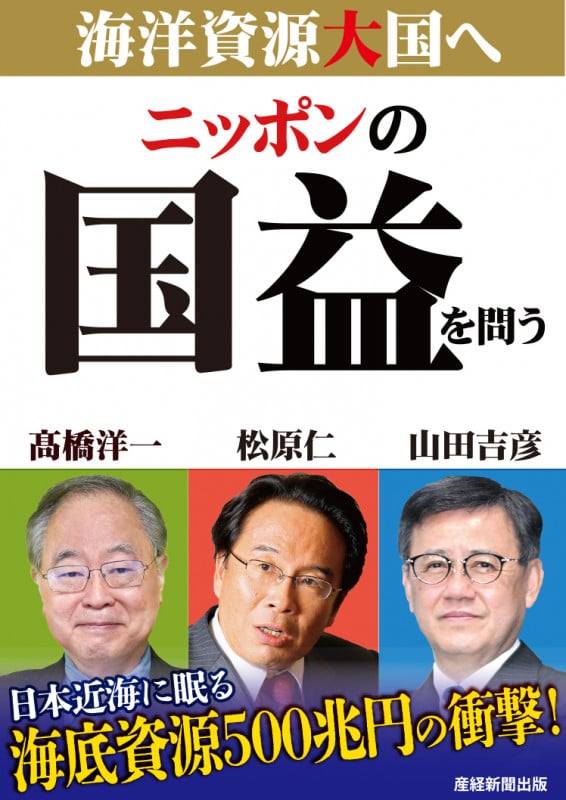
・The reality of the extended continental shelf as Japan's territorial sea/EEZ, which boasts the 6th largest area in the world, is that even though there are plenty of undersea resources that sleep undeveloped, the resources that lie dormant on the seabed, such as methane hydrate rare earth mud and submarine hydrothermal deposits, are strategic resources that contribute to future energy security, independence of industrial infrastructure, and strengthening international bargaining power. If technology to independently develop these resources in a stable and environmentally friendly manner can be established, This is not limited to “resource nationalization,” which changes from a resource-poor country to a resource-rich country, but it also transforms as a “resource development technology powerhouse” and establishes a new international status (p77)
・Japan was approved to participate as an observer at the 2014 CPLP summit (9 countries consisting of countries whose native language is Portuguese, Brazil, Portugal, Angola, Mozambique, Guinea-Bissau, Sao Tome and Principe, East Timor, Equatorial Guinea), and Prime Minister Abe at the time sent a message that he would like to cooperate with the development of the CPLP countries (p81)
・Despite America's withdrawal, TPP 11 is one of the few strategic success examples that were maintained and brought into effect (2018) due to Japan's leadership. What should be noted here is that while keeping a distance from the EU, which is Britain's participation in TPP11, they are searching for new cooperation in the Asia-Pacific region, and there are high expectations for strengthening the relationship with Japan (p83)
・Methane hydrate, also known as burnable water, is a sherbet-like substance crystallized with methane gas, which is the main component of natural gas, and water crystallizes under low temperature and high pressure conditions, and it is estimated that there are huge amounts (120-130 trillion yen) of carbon dioxide emissions during combustion compared to fossil fuels such as coal and petroleum, in particular, surface layer types on the Sea of Japan side (Toyama Bay, off Joetsu, Oki) and the Nankai Trough (off Shizuoka, Aichi, and Wakayama prefectures) on the Pacific side ( p94)
・Rare earth mud (100 trillion yen) is an extremely concentrated rare earth mud discovered in the deep seabed of the EEZ around Minami-Torishima in 2018, which is an essential element group for cutting-edge high-tech products and green technology, such as high-performance magnets, light emitting diodes, catalysts, battery materials, etc. (p98)
・Cobalt rich crusts (200 trillion yen) exist around Minami-Torishima and the Ogasawara Islands, containing high concentrations of various useful metals such as nickel, platinum, manganese, copper, molybdenum, tungsten, and rare earths, mainly cobalt (p100)
・There was a shift to a floating exchange rate system in 1971, but Japan did not immediately face the reality of a variable exchange rate system; feared the impact of a rapid appreciation of the yen on the Japanese economy, maintained various regulations on the international movement of capital, and frequently intervened in the exchange market (intervention to sell yen and buy dollars). This was called a “dirty floating exchange rate system = dirty floating exchange rate system), which essentially controls the yen exchange rate within a certain range while ostensibly pretending to be a floating exchange rate system. This policy further expanded Japan's huge trade surplus and became a factor causing trade friction with America (p167)
・The government raises funds by issuing government bonds, and this is a debt for the government, but the Bank of Japan, which is the central bank, is buying a significant portion of those government bonds from the market as part of monetary policy; this is an asset for the Bank of Japan, and when viewed by the government alone, debt only increases, but if the government and the Bank of Japan are integrated and viewed as one group, debts (government bonds issued by the government) within the group are offset, and this makes the government/Bank of Japan Group The actual amount of debt that is genuinely owed to the outside world (private sector, overseas) is clarified (p178) total liabilities (Bank of Japan holdings, etc., are offset against total assets of 1500 trillion yen; when considering an integrated balance sheet, Bank of Japan liabilities = cash, BOJ current accounts, and corresponding assets = government bonds held, p184) is approximately 800 trillion yen, and net differential assets are positive 700 trillion yen (p181)
・The fact that Japan has excellent financial wealth can be understood by the fact that interest rates on Japanese government bonds have remained stable at a low level, and that the guarantee rate of “CDS; credit default swap), which indicates national default (debt default) risk, is at the lowest level among major developed countries (p185)
・In order to evaluate the economic rationality of public works, it is necessary to calculate the benefits that will occur over the future by discounting the current value and compare the total amount (total present value of benefits) with the initial investment cost (total present value of expenses), but depending on the setting of a discount rate called a “discount rate,” the same project can be a business that should be done or a “business that should not be done” (p191) in Japan The discount rate used as a standard in public works evaluations is 4%, and since it was set in fiscal 2004, the yield on Japan's long-term government bonds has remained in the first half of the 1% range (p192) when a project called a benefit of 500 trillion yen with an investment of 100 trillion yen is evaluated at a discount rate of 4%, its current value is drastically reduced, and in some cases it is evaluated as falling below the initial investment cost, and it is determined that there is no economic rationality ( p198) What should be asked is not “whether or not there are financial resources of 100 trillion yen,” the question is “whether that 100 trillion yen investment will bring benefits exceeding that cost over the future, that is, an increase in the assets of citizens as a whole” (p216)
・In order to regain a strong growth trajectory and pass on a rich and sustainable society to the next generation, Japan is an “AI nation” that dramatically improves the productivity of society as a whole by 1) “becoming a marine resource powerhouse” = unearthing potential wealth hidden in the EEZ, establishing energy security and creating new core industries, and 2) overcoming the restrictions of labor shortages due to population decline through thorough use of AI and robotics, and dramatically improving the productivity of society as a whole. They are not independent of each other; they complement each other and are in a relationship that creates a strong synergy effect (p212)