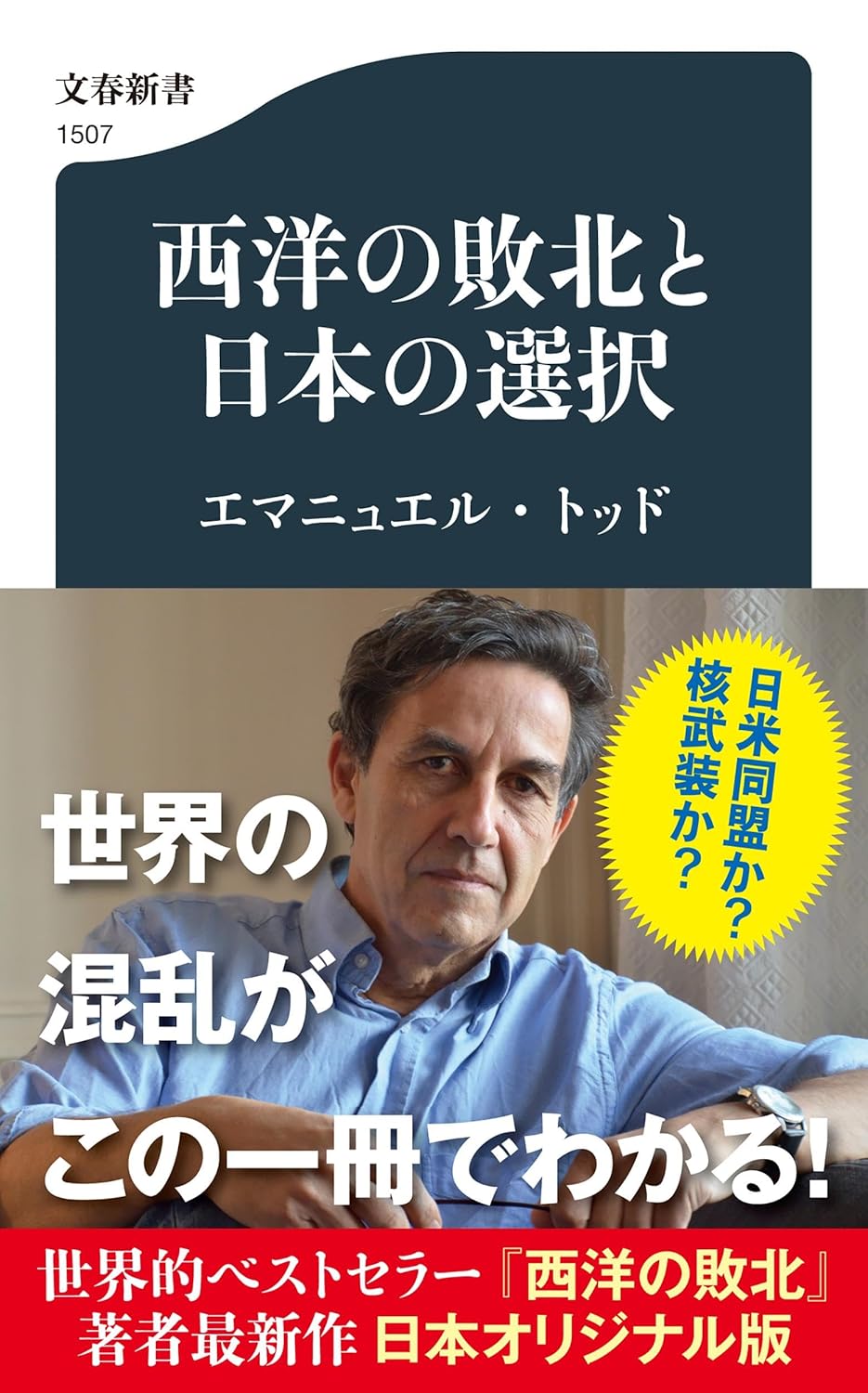
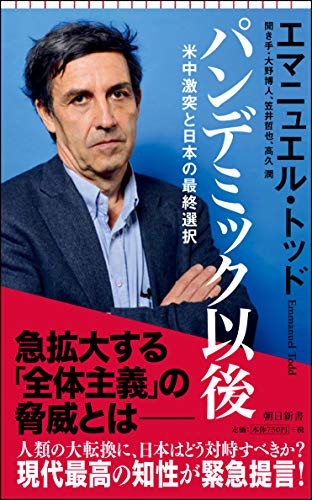
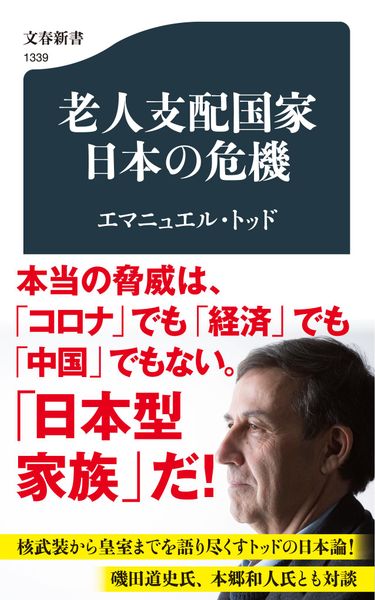
In this book, Emmanuel Todd sees the Ukraine War and the war over Iran not as individual regional disputes, but as a single world war that occurred in the process of ending the Western-centered world order. The Northern Front is Ukraine, and the Southern Front is Iran, and behind that, the West, centered on the United States, and a coalition of Russia, China, and Iran are facing each other (pp. 165-168).
While the United States has overwhelming military technology, it has avoided ground combat and tried to make the opponent surrender by air strikes. This method of warfare, which minimizes human damage on one's side and causes enormous damage to the attacked side, is a return to colonial asymmetry. However, Iran used ballistic missiles, drones, and geopolitical conditions in the Strait of Hormuz to cause the United States and Israel to consume large quantities of expensive weapons. U.S. arms stocks, which had already declined due to support for Ukraine, were also being exhausted in the Middle East (pp. 4-5). America's technological superiority did not bring about a decisive victory against Iran, which possesses a large number of cheap missiles and drones and does not resign from a protracted war (pp. 168-171).
Russia, Iran, and China are supporting each other to detain the United States. Russia and Iran share drones and military intelligence, and China supports both countries economically (p. 168). The United States simultaneously has a war with Russia, economic competition with China, and military confrontation with Iran, and is unable to win or completely withdraw. This is because if withdrawal is recognized, it is not simply a defeat in war, but it means the end of the “American imperial system,” which has supported the rich consumer lives of American citizens by absorbing wealth from around the world (p.5).
An important basis for Todd's prediction of Western defeat lies in declining productivity and education. The GDP of Russia and Belarus just before the Ukraine war was only about 3.3% of Western countries. Nevertheless, the Russian side showed a weapon supply capacity superior to that of the West. This means that GDP no longer represents actual productivity (p. 31). The GDP of the United States also largely includes service sectors that are not productive, such as expensive medical expenses, attorney fees, and prisons. Meanwhile, what is important in long-term warfare is not only the latest expensive weapons, but also the ability to continue making large quantities of cheap, simple weapons. In measuring true productivity, the number of engineers is more important than GDP (p. 175).
Educational ability to train engineers is declining in Western countries. Russia, which has less than half the population of the United States, has produced more engineers than the United States, which supports Russia's superiority in the Ukraine war. Japan and Germany are close to Russia in that they still relatively maintain the ability to train engineers (p.32). Iran is also not just a country of religious leaders; it is also a “country of engineers” that trains a large number of engineers and produces missiles and drones in its own country (p. 122).
One of the forces that supported the development of America and England was the educational ability of Protestantism, which emphasized reading the Bible. However, after the extinction of religion, the ethics that supported education were also lost, and industry hollowing out, living standards declined, and freedom declined (pp. 28, 33). The current American elite is inclined to maximize the three values of power, profit, and pleasure, and disregards education and industry necessary for long-term reproduction of the nation (p. 137). In response to this, Putin placed the foundation for national reconstruction on children's education, and believes that if education is neglected, the nation will perish (p. 147).
Todd does not view the war in Ukraine as a simple one-sided Russian invasion. I think the eastward expansion of NATO, attacks on Russian residents within Ukraine, and arms supply by the US and Europe induced the war (p.37). The reason why the Trump administration does not clearly state defeat while seeking peace and shifts responsibility to Ukraine and Europe is because the United States cannot openly acknowledge its own defeat (p.55). The tariff policy against China was also counterattacked by rare earth export restrictions, and the United States was pressured to make concessions (p. 108). Whether in the military, economy, or industry, the West's superiority is being lost.
According to Todd, the Ukraine War and the Iran War are the two fronts of World War III (p. 165). If the West loses these wars, the Western world domination that has continued since the 16th century will end, and we will shift to an order where multiple civilizations and nations coexist. True peace is said to come only after the complete collapse of the US hegemony system (p. 195).
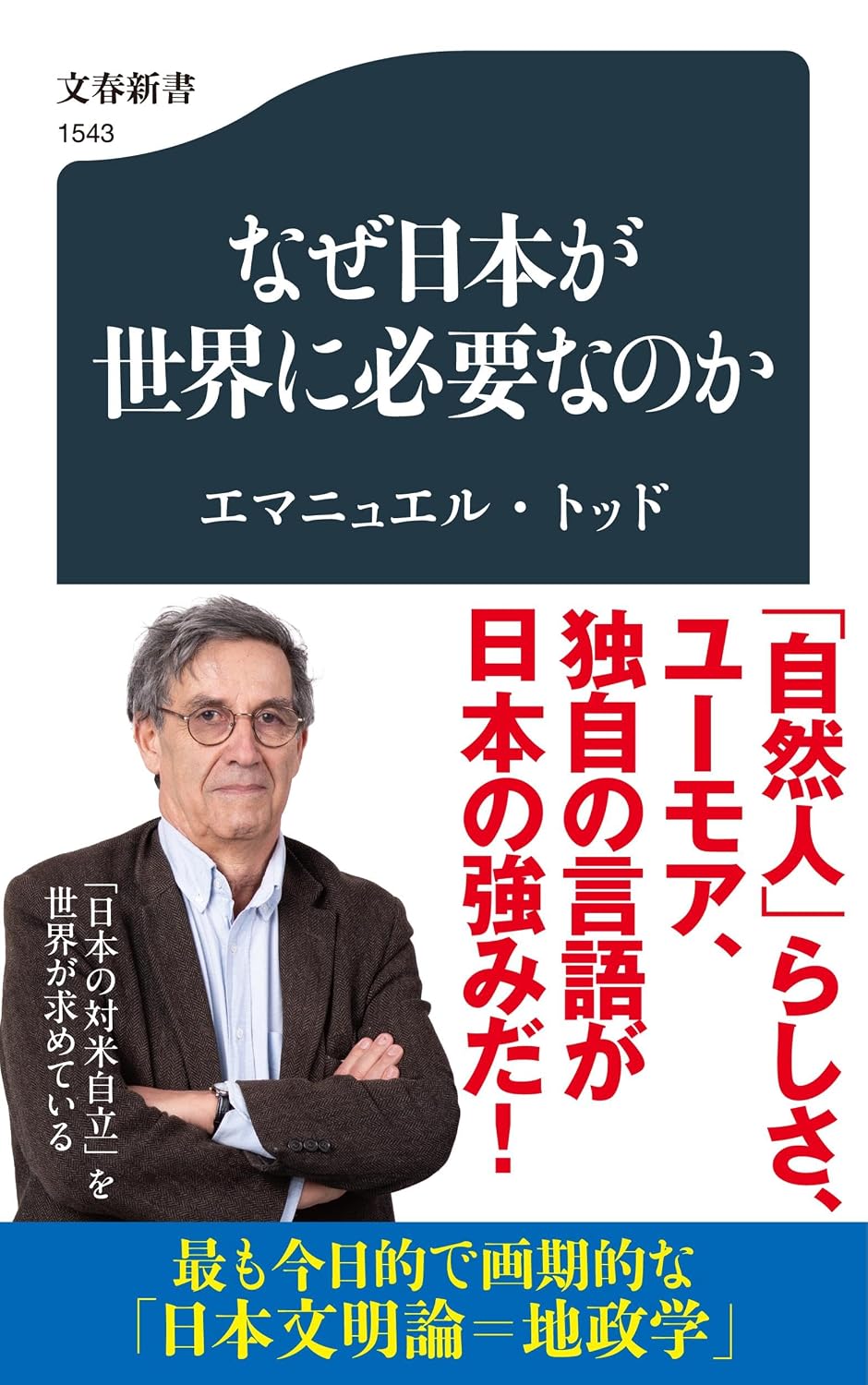
Japan is in a special position in this transformation of world history. Japan is still politically and militarily subordinate to the United States, but it maintains a language and culture different from the United States, and has strong cultural autonomy. Therefore, it leaves the possibility of intellectual independence within political subordination (p. 215). Also, natural humanity, humor, and sense of beauty live in Japan, and Todd expects that this will be a force to reject war (p.13).
What is required of Japan is not to share its fate with the declining United States. It is about choosing intellectual and political independence based on a unique culture, educational ability, technical ability, and humanity, and playing a role in the formation of a new world order. The reason the world needs Japan is that Japan has uniqueness that cannot be completely recovered by the West or non-West, and it can show the possibility of a civilization that is not just about power and profit.
summary
Why does the world need Japan