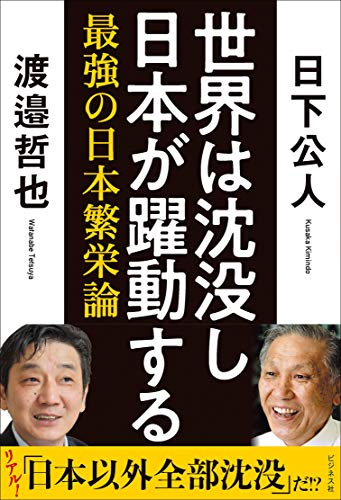
・You should only associate with countries that have a Japanese constitution or are not currently preparing but are working hard to prepare; specifically, it is a country that abandons the four principles of 1) ideology 2) religion 3) hegemony (hegemony) 4) dictatorship, and incorporates the five principles of 1) peace 2) freedom 3) democracy 4) equality 5) middle class. Taiwan as an example (p29)
・Since the United Kingdom abandoned the continent due to Brexit, it is forced to adopt a maritime national strategy, and it will inevitably strengthen the relationship with the United States/British Commonwealth (Australia, New Zealand, Canada, America). In Taiwan, security meetings are held with the participation of Asia-Pacific countries and the United States, and Japan also joined them (p43)
・If Japan wants to work well with America, they would choose 26 poor states and build local factories to make Japan friendly; however, selecting anti-Japanese states and manipulating America has been the method of the Ministry of Trade and Industry until now (p47)
・Currently, 21 states (Texas and Ohio) such as Arkansas, Colorado, Florida, Georgia, and Indiana have established state offices in Tokyo. These states should be treated kindly (p48)
・Countries with a long history are properly built up by following the time axis of ancient times, the Middle Ages, modern times, and there are many countries in Japan, Southeast Asia, and Europe, but China has ancient times and the Middle Ages, but there is no modernity (p51)
・Japanese people imagine France as a country of art, but it is a socialist country with many state-owned enterprises, and there is “freedom, equality, and fraternity” advocated by the French Revolution, but originally it is “fraternity.” Fraternity is a word that justifies killing someone other than a friend (p61, 62)
・In 2011, China's GDP reached 500 trillion yen and surpassed Japan, but one-quarter of that was the military budget, so there is no point in comparing them. There are no prospects for recovering irresponsibly expanded investments. America also has errors and omissions. The IMF data is also quite suspicious since it is not much different from the communist government's announcement (p65)
・Regarding Japan's population decline, the Edo period is a hint; Japan is full of roads up to the mountains, which are extremely convenient, and unlike cities, there are no traffic jams. All Japanese people have two residences in the city and the countryside, and they should take turns of work where they live in the countryside for half of the year (p117)
・In European years, it was common to throw garbage and manure down the street, so infectious diseases such as cholera and plague spread. The reason why roads were paved ahead of the rest of the world in Europe was to improve this sanitary condition (p123)
・If there is bushido = Confucianism among samurai in Edo, merchants in Osaka had merchant manners (Sekimon Shingaku), they must not make money by doing anything, if you swear to Tenchi Shinmei and act well, profit will naturally follow, there is nothing better than hard work and savings, and live a life that suits your financial strength (p134)
・If you think about whether Western Europeans don't have confidence in their future, it's because “predators” have no autonomy. Targets of looting are always necessary, and world peace cannot be achieved by doing this with each other (p144)
・Among developed countries, there are few countries that exist in their own language up to the level of specialized books, and this can only be done in English, German, French, and Japanese, and most emerging countries that have been invaded by other countries provide higher education in other languages (p170)
・The American performance principle will end, and a second round battle will begin between a company that looks at Japan's original sense of community and camaraderie, and an American market universalist/individualist company with objective evaluation principles (p178)
・A bipartisan parliament called the “Japan Caucus” was formed in the US House of Representatives in 2014, and 62 bipartisan members of the House of Representatives agreed with the appeal from the Japanese side, and it is the cornerstone of Japan's US lobby (p184)
Created on 2020/3/29