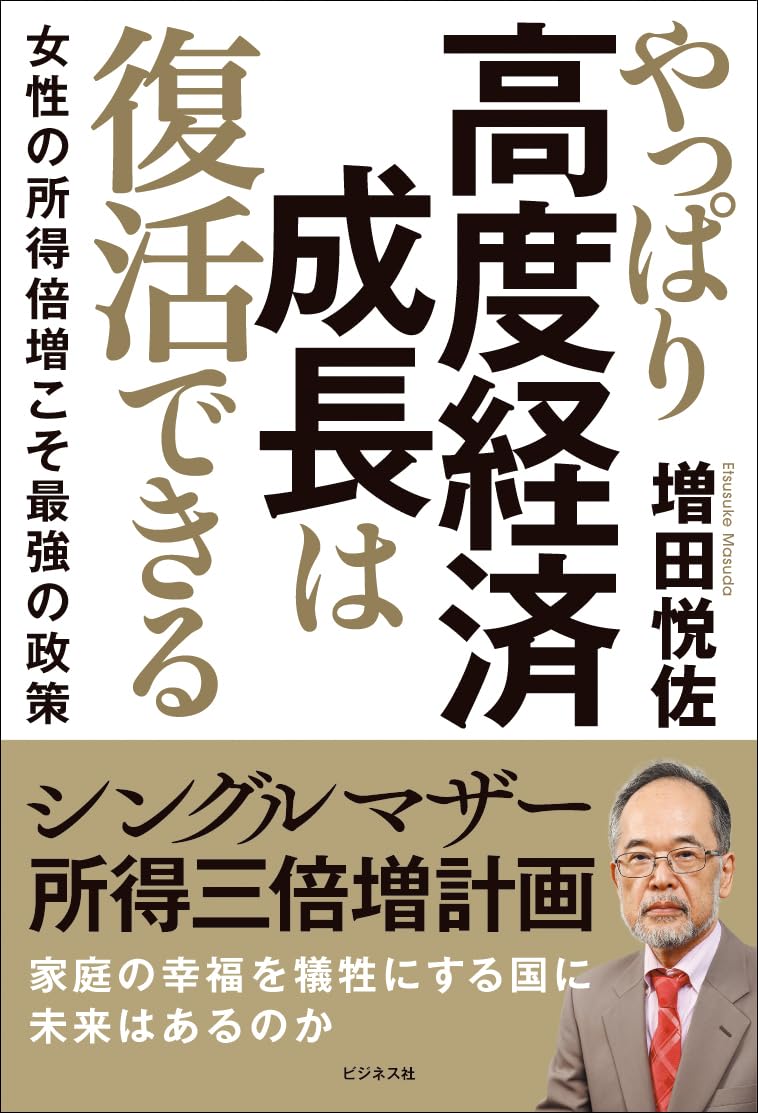
・There are “unfortunate methods” and “happy ways” to stabilize inflation, and the unfortunate method is a method of suppressing inflation by causing the Bank of Japan to raise interest rates rapidly and worsen the economy. The happy way is to increase investment to expand supply capacity and thereby stabilize inflation. If supply capacity increases, the potential growth rate will increase, labor productivity will improve, leading to an increase in real wages. What Sanaenomics aims for is this happy method, criticism of rewriting Abenomics is also out of place; large-scale monetary easing plays a leading role in Abenomics, but in Sana Enomics, fiscal policy plays a leading role and seeks “moderate interest rate increases” in monetary policy, and it is a completely opposite approach with interest rate hikes rather than monetary easing (p5)
・If the sum of the savings rate and fiscal balance is not sufficiently negative, the economy cannot grow sufficiently, and income does not flow well into the household budget. However, in Japan, this value has remained close to zero, and this is the true cause of the 30-year stagnation (p6)
・In the financial crisis that occurred in 1997, companies steered in the direction of reducing borrowing, proceeding with restructuring, reducing costs, and accumulating internal reserves, and a major shift to “cost cut management,” which prioritizes debt repayment over domestic investment and prioritizes strengthening financial positions over return to employees (p20) As a result of all companies adopting cost type management, which is a rational strategy for companies, the economy as a whole There was a “synthesis error” where total demand was insufficient and pie did not expand more and more (p24)
・Companies can only do their best within a given environment, changing the environment itself is impossible with the power of individual companies, and it is the role of the government to change the environment. Companies were forced to compete for cost cuts precisely because the government did not expand the scale of the economy due to fiscal transfers (p25)
・Internet demand = corporate savings rate+ fiscal balance (ratio to GDP), the reason for adding the two is to look at the “power to use money” of companies and governments combined, and in my analysis, negative 5% of the GDP ratio is an appropriate level. At this level, the economy will expand moderately, nominal GDP will grow at an annual rate of around 3%, and prices will remain stable at around 2% (p29)
・Looking only at the fiscal balance, the Japanese government has continuously recorded a deficit, but that deficit was only at a “last minute” level to offset the positive portion of the corporate savings rate, so demand for internet funds remained stuck at zero (p31)
・The COVID-19 pandemic from 2020 onwards was both a crisis for the Japanese economy and an opportunity for an experiment, and the size of the supplementary budget reached tens of trillion yen in fiscal 2020 alone, and as a result, demand for internet funds temporarily became negative 5% of GDP, and as a result, Japan's nominal GDP rapidly expanded from 500 trillion yen, which had remained flat for nearly 30 years, to the latter half of the 600 trillion yen range, stock prices also rose, corporate performance improved, and tax revenue also drastically increased (p35)
・The root cause of wages not rising in Japan is that the overall economy pie has not expanded; nominal GDP has remained flat for 30 years is that the total amount of income generated by the economy as a whole has not increased, and wages distributed from there cannot be an increase if the pie does not grow (p41)
・What makes households feel difficult is not an individual household budget issue, but a macroeconomic structural problem, and the structure is such that income does not go to households due to insufficient corporate and government spending (p45)
・The net debt of the American corporate sector has reached 207% of GDP, American companies actively borrow and continue investing, and Eurozone companies are also 61%; in contrast, Japan's net debt is “minus 10,” which means that Japanese companies have not been able to grow even though they are in a super healthy financial state, and they continue to miss opportunities for growth (p49)
・Abenomics's growth strategy tried to encourage private investment through deregulation and destruction of vested interests, but the results did not meet expectations, and private sector investment did not increase as expected even if deregulation was promoted or corporate taxes were lowered. The reason for this is that if there is no demand, investment will not increase. Neither deregulation nor tax cuts are effective in a situation where there is no demand even after investing (p56)
・The Ministry of Finance itself acknowledged that the 60-year redemption rule for government bonds is “not a rule for reducing the balance of national debt” and “just a preparation to show a moderate attitude,” in other words, in Japan, in fact, like America, etc., government bonds are permanently managed as refunded bonds (p75)
・It was common to use total debt balances when comparing government bonds, and since financial assets are small in many countries, the difference between total debt balance and net debt balance is not large, yet Japan has exceptionally huge financial assets. There are circumstances unique to Japan, such as differences in pension systems and the scale of foreign exchange reserves. Furthermore, there is a possibility that the way Japan's finances are shown has a bias of “making it look bad” (p86)
・Conventional financial management aims to make the primary balance (basic fiscal balance) surplus, and this is the idea of covering policy expenses for that year with tax revenue for that year, and financial resources are sought for all qualities, including growth investments. On the other hand, the index of net debt balance to GDP looks at the balance between debt and assets, and even if government bonds are issued and growth investments are made, net debt balances do not deteriorate significantly if they remain as assets (p87)
・Comparing government debt costs between Japan and the United States, there are two differences compared to debt reimbursement costs of 18.3 trillion yen and interest payment ratio of 11.3 trillion yen in the case of Japan; in the case of America, there are 2 differences; 1) in the case of America, debt reimbursement costs are not included, and there is an assumption that government bonds are permanently managed as refinancing bonds. Since there is no need to repay the principal amount of government bonds, it is a global standard where there is no need to record debt redemption costs in the budget, and only Japan records debt reimbursement costs without substance based on the apparent rule called the 60-year government bond redemption rule. The money of 18 trillion yen has no actual state and is not included in actual expenditure, 2) what is recorded in the Japanese budget is the total amount of interest paid by the government, while what is recorded in the American budget is “net interest payments = net interest income received by the government minus interest rate income received by the government”, and this difference is extremely important (p95)
・Financial assets held by the Japanese government include various financial assets such as foreign exchange reserves of 200 trillion yen, pension reserves of 200 trillion yen, interest reflux from government bonds held by the Bank of Japan, and loans and government investments from fiscal investments and loans, which generate profits. What has been overlooked is that if interest rates rise, interest payments will rise, but government interest rate revenue will also increase (p97)
・When debt reimbursement costs are excluded and interest payments are changed to quasi-interest payments, the ratio of government debt expenses to expenditure is only 6%, which is 1/3 of America's 14%. Seen from a global standard recording method, Japan's national debt burden is much lighter than America's (p100)
・As for expenses, mandatory expenses (those that are required to be spent by law, social security, etc.) are automatically spent unless the law is changed, so financial resources are basically linked, while discretionary expenditure (public investment, labor costs, etc.) does not link financial resources, this is the way of thinking of a global stand, in other words, discretionary expenditure is managed flexibly (p105)
・Interest rates on Japan's 30-year government bonds have recently risen to a level of over 3%, and there are people who look at this and argue that interest rates are rising due to financial unease, but this interpretation is wrong. Interest rates on 30-year government bonds in the 3% range are “normalization” incorporating nominal GDP growth rates in the 3% range (p118)
・The combined net debt balance (GDP ratio) of the government and companies is 313% in the US, 118% in the Eurozone, and 72% in Japan; Japan's debt is the smallest of the major countries, and Japan's debt structure is the healthiest among major countries, so there has been no sharp rise in interest rates in Japan for the past 30 years (p121)
・The reason why the depreciation of the yen does not stop even if the Bank of Japan raises interest rates is that there is no expectation that domestic demand will expand. If there is an expectation that domestic demand will expand steadily, the view that future policy interest rates will rise to 2% inflation will increase, and then the depreciation trend of yen will shift to a trend of appreciation of yen (p124)
・Looking back on history, the cases where currency became waste paper have something in common: the collapse of supply capacity. Factories were destroyed by war, infrastructure was destroyed by natural disasters, production activities were stopped due to political turmoil, severe inflation will occur if currency is issued in such a situation, and conversely, currency will not become waste of paper as long as supply capacity is maintained (p131)
・The government performs “financial verification” of pensions once every 5 years, and the results are surprising. In the case of a real GDP growth rate of 1%, the degree of welfare pension accumulation (= how many times the annual expenditure is there) will diverge even after 100 years, that is, funds will continue to increase, while in the case of a zero growth rate, the degree of reserve drops to 1 times, the fund will be destroyed but not exhausted, that is, if the real GDP growth rate is only 1% pension finance It is still quite healthy even after 100 years, and the current potential growth rate of Japan is said to be around 0.6% (p140)
・High municipal administration aims for a “high pressure economy” that pushes the receipt gap from a low pressure economy based on 0 to plus 2% or more, which means a state where demand slightly exceeds standard supply capacity, and when this is realized, a virtuous cycle is created in the economy, companies' motivation to invest increases · labor market tightens · sense of economic recovery spreads · corporate savings rates head negative (p160)
・Indicators to pay attention to when looking at Japanese economic posts as investors are internet fund demand/supply/demand gap/capital investment cycle/corporate savings rate/net debt balance to GDP ratio (p256)