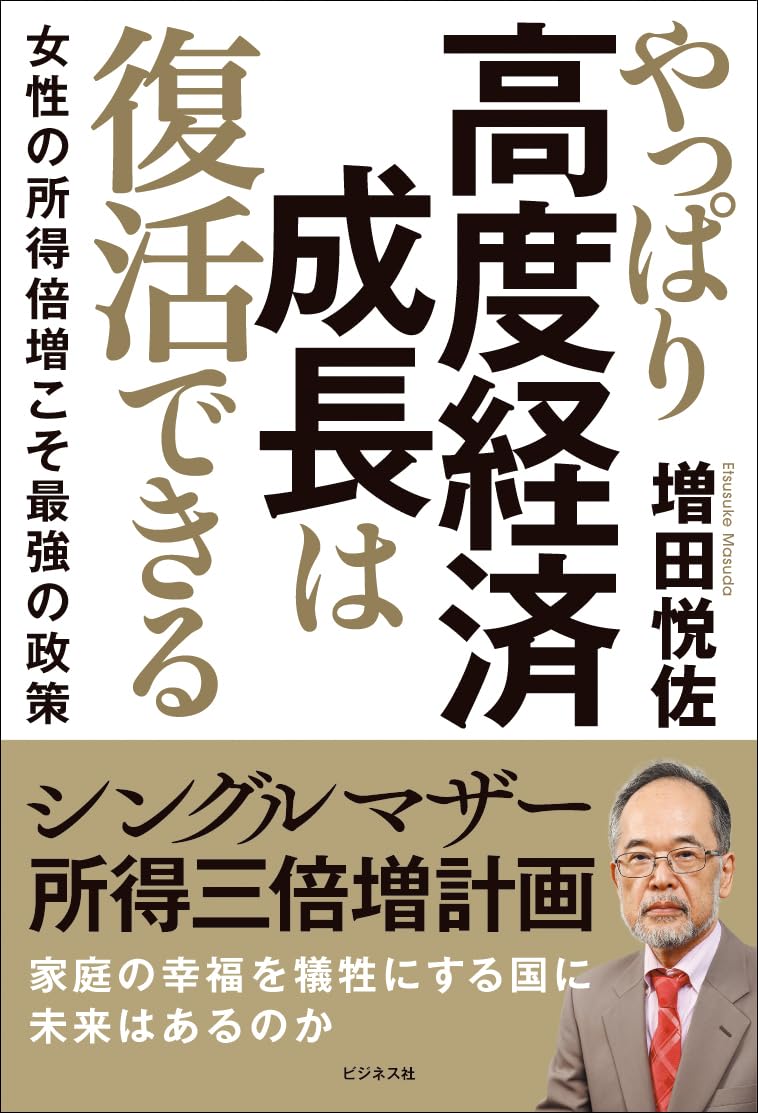
・As it is now, the yen depreciation trend will continue and Japan's inflation rate will remain high in the future. The depreciation of the yen is also a factor that keeps inflation high, but an even more important factor is labor shortages. Japanese companies' profits in yen will expand, nominal profits in yen will increase even if there is no real growth, and stock prices will rise (P28)
・Gold prices did not rise rapidly from 2025; they had been rising even before that, but the rate of increase has been speeding up in the past few years, and the background is that confidence in currencies issued by central banks in each country has declined. It has become a normal act for the government to issue subsidies to financial institutions and citizens who are having trouble with cash flow due to the COVID-19 pandemic that spread in 2020, and this subsidy was conceived by the central bank purchasing international products issued by the government and handing over the money to the government, and in this way, the currency held by private companies and households increases, and as a result, the value of the currency falls. This is shown in the form of an increase in gold prices (P31)
・There are things I want people who work as members of society to think about at least once, what is the most promising investment destination, the answer is “myself,” and only myself is the investment target that brings the highest return (P41)
・Two reasons why Japan, which was famous for its high prices, has become a cheap country: 1) the rate of increase in prices is large overseas and prices have hardly risen in Japan; it is recently that price increases have become conspicuous in Japan; 2) the value of the currency called “yen” used by Japanese people has become extremely cheap (P60)
・Despite the fact that the value of yen has not declined that much when viewed within Japan alone, it is no longer being evaluated internationally; specifically, “if you buy yen that is very cheap when viewed from overseas and use it in Japan, you can buy various things and services at a bargain price within Japan, but no one looks at it.” Japanese goods and services are bought to the point where yen is not cheap originally, and the yen appreciates as a result of investments being made in Japan It should be (P65)
・When evaluating exchange rates, it is necessary to consider differences in price fluctuation rates as well; since the 1970 exchange rate was 360 yen per dollar, the evaluation that the current price of 150 yen per dollar is higher is incorrect, and compared to 1970, prices in the US have risen significantly compared to Japan. In effect (real effective rate of yen), the current level of yen depreciation of 150 yen per dollar is at a lower level than when it was 360 yen per dollar (P68)
・The two reasons why the yen has become extremely weak, 1) real interest rate = interest rate minus inflation rate is drastically negative, which directly affects the decline in the value of money, 2) the outflow of funds from Japan to overseas is increasing, and the trend of Japanese people making connections to buy foreign currency and purchasing overseas asset products and services is growing (P81)
・The real problems with the increase in government bond issuance balances are 1) how to use funds raised by issuing government bonds were previously government assets (dams, buildings, etc.), but recently they are being distributed directly to citizens, 2) interest rates are not expected to rise, and 3) relying on central banks to increase government bond issuance (P108)
・Since bank deposit interest rates are currently 0.2% and the inflation rate is around 3%, the real interest rate is negative 2.8%, which means that if you have a currency called yen, it will decrease by 2.8% every year (P113)
・Labor shortages in Japan are due to shorter working hours rather than population decline; total annual working hours per person have decreased by 20% in the 35 years from 1990 to 2024, and the number of workers has increased almost every year since 2010 (P119)
・As factors that led to a decrease in working hours, 1) there are many effects of the “Work Style Reform Related Law” promulgated in 2018/7 and enforced from 2019/4, 2) movements to suppress working hours because dependents such as a spouse or the like are not required to pay social insurance premiums when working hours have risen due to an increase in wages for non-regular employees, and there is a possibility that working hours have been rapidly shortened in the past 10 years or so due to this (P121)
・If you compare the number of people by dividing the population of Japan by age group of 5, the largest population is the 50 to 54 year old group called second-generation baby boomers, which is close to 3 times the current number of births, where 2 million people were born every year. The next most common group is the 55 to 59 year old group, which means that the current population of people in their 50s is extremely large and accounts for 15% of the total population, the ratio of the senior class to employers will increase for the next 10 years or so, and the number of workers will still increase, and Japan has implemented a policy to forcibly shorten working hours at the timing when population decline will finally have a big impact on the labor market, so the sense of labor shortage intensified all at once, and that is an increase in wages. It is leading to price increases (P124)
・An “interest rate hike” may not be the best policy for dealing with current inflation in Japan, but at least it is not something that can be solved by cutting taxes or paying subsidies. Originally, policies to increase supply should be implemented, and there is nothing to be done with the central bank's monetary policy, and the depreciation of the yen is also one cause of inflation, so the only way to deal with it is to return real interest rates to positive by raising interest rates by the Bank of Japan (P131)
・Recently, the price of gold has continued to rise whether viewed in US dollars or yen; this does not mean that the value of gold is increasing, but the value of money is declining, and the market sensitively senses the decline in the value of money, which has led to an increase in gold prices (P147)
・Stock prices are determined by the “profit X ratio,” in other words, it is a system of how much a company's profit will become until how many times that, and during the bubble period, the ratio swelled, that is, only expectations that high-level corporate profits would continue for a long time to come, so it burst. However, the increase in “profit” is being boosted by the increase in “profit”, and a significant portion of the increase in profit is due to “depreciation of the yen” and “inflation,” so if the depreciation trend of the yen continues and the inflation rate remains high as expected by the author, the prediction that the Nikkei Stock Average will rise to 150,000 yen is not that surprising, however, since prices will rise at the same time, it is different from the current feeling of 150,000 yen ( P160)
・Japan's current account surplus in 2024 is the largest ever at 28.7 trillion yen, and even when viewed in terms of nominal GDP ratio, it is 4.5% and almost the same level as 2007; why does the yen not appreciate even though it is the largest surplus ever, the answer lies in the breakdown of current account surpluses; Japan's current account surpluses are all surpluses in the primary income balance, and without that, the current account balance is in the red. What is the primary income balance “investments made overseas in the past It means “profit obtained from” (P168)
・ There is no limit to the “yen sales intervention” carried out from 1990 to the 2000s to stop the appreciation of the yen; there is basically no limit to issuing Japanese government short-term securities, procuring yen, and selling them on overseas exchange markets to buy foreign currency. However, when market participants see through that there is no effect even if a “yen purchase intervention” is carried out, there is a possibility that speculators around the world will actually try to sell yen. If that happens, there will be no way to stop yen selling pressure, currency crises that occasionally occur in emerging countries will occur in this way, and Japan may also be on the verge of that (P192)
・What is clear in the difference between Japan and Switzerland is that Japan focused on “price rather than value” and relied on “cheap overseas” production, and tried to increase export competitiveness by weakening yen for domestically produced portion, in other words, it pursued low prices. Switzerland focused on “value over price” and in order to create high quality products, trained domestic human resources and accepted excellent human resources from overseas, and Switzerland aimed for “high value because quality is high” (P205)
・It seems that a very large factor that led to the Japanese economy experiencing 30 years of loss is due to Japanese personnel systems, labor practices, and employment systems (P209)
・What I feel after looking at the corporate culture of both the US and Japan is not “which is better/worse,” but the difference between “which one fits the current era” (P212)
・ When AI takes the place of beginner to advanced level jobs, the human resource development system in organizations fluctuates from the ground up, and if seniors who have already acquired specialized knowledge can give appropriate instructions, the world is expanding where AI can perform tasks accurately and quickly. In other words, in the future, the question “who can give correct instructions to AI” will be questioned rather than “who moves hands.” In order to train people who instruct AI, there may be education at graduate schools and professional universities (P218)
・Is it sometimes mentioned in order to return profits raised by Japanese companies to Japan? It is a “repertoire tax cut,” Japan has already introduced a system that exempts 95% of dividend gains received from overseas subsidiaries, and it is necessary to create an environment that makes companies want to return funds to Japan and invest within Japan (P226)
・Organizations where people with diverse backgrounds can turn their characteristics into strength are strong organizations, and in a homogenous group, new ideas are less likely to be born, and resistance to changes in the environment weakens. Companies should increase the number of female managers not only for gender equality, but also to strengthen the organization. The same theory applies to nations, and when Japanese people with diverse roots gather, their strength as a country also becomes stronger (P248)