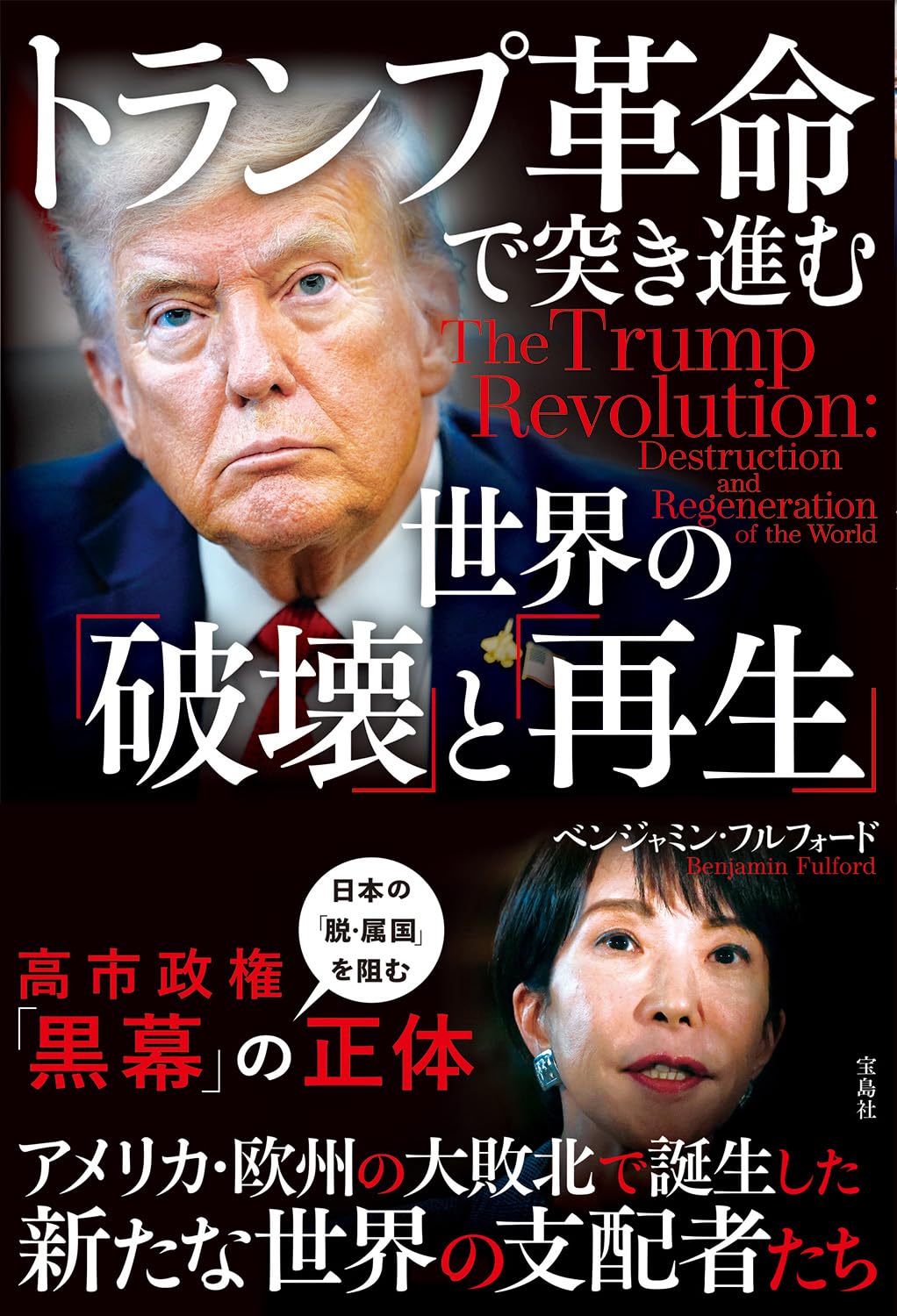
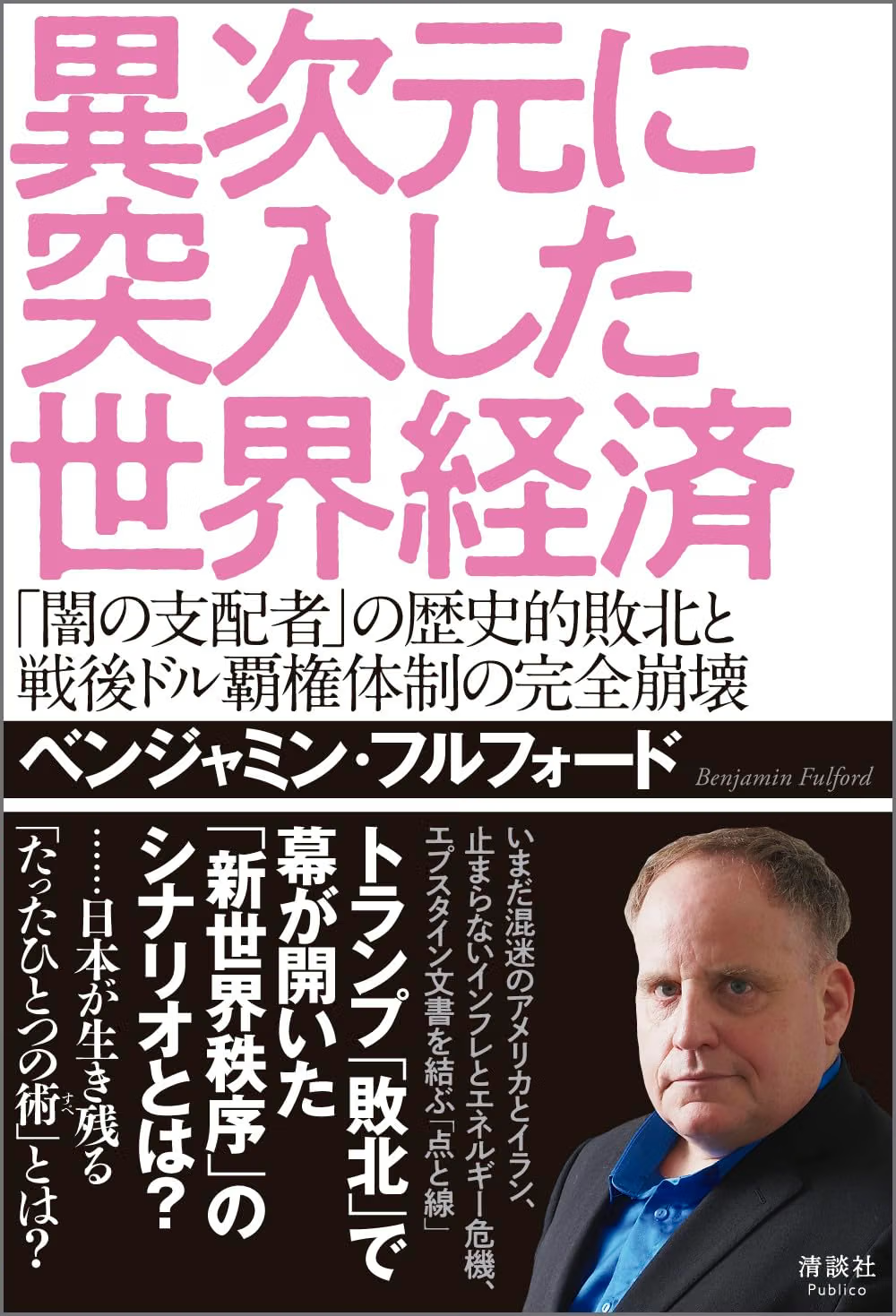
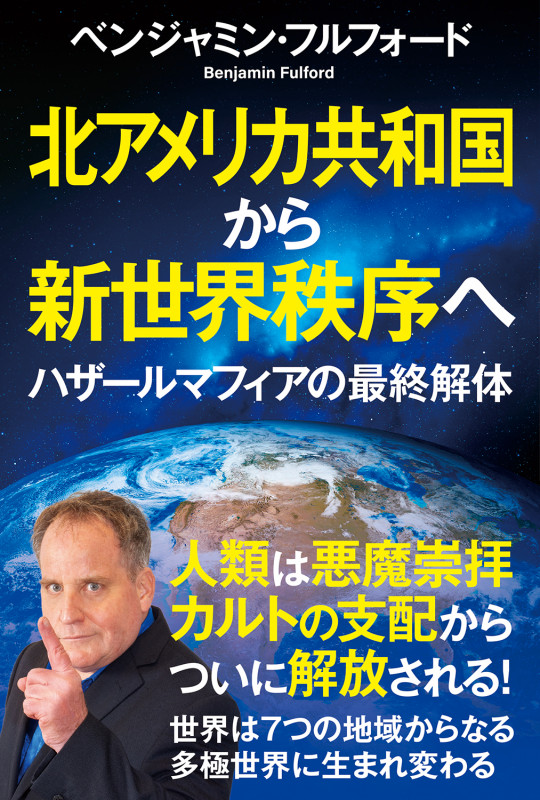
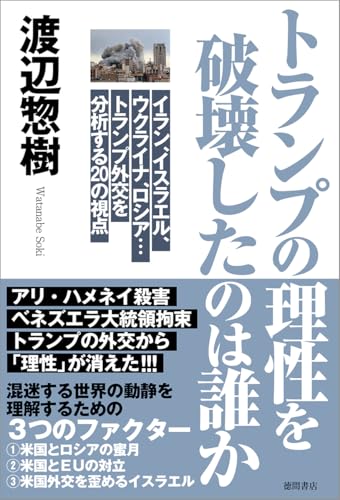
In this book, Benjamin Fulford describes America under the second Trump administration not simply as a change of government, but as a process where the conventional American-centered world system collapses and transitions to a new international order. While the New York Dow average hits high prices in the stock market, the general public suffers from high prices, and the author sees that the divergence between financial markets and the real economy is progressing extremely (p3).
What the author emphasizes as a symbol of this is the issue of US bonds and dollars. While countries that have acquired dollars through trade, such as China and India, are reducing their dependence on US bonds, they take up the fact that holdings through financial centers such as the Cayman Islands and Luxembourg are growing, and argue that the US financial system is moving away from the real economy (p6). In fact, according to US Treasury statistics, as of the end of 2025/6, the Cayman Islands and Luxembourg are regions that hold large amounts of US securities, but that itself does not directly mean “finance without substance” referred to by the author. U.S. Department of the Treasury
Regarding the Trump administration, the author points out the contradiction between the government spending reduction line initially set up and subsequent policies. While advocating government efficiency improvements, it is said that in 2025, while implementing large-scale tax cuts, a bill to increase military spending and spending on immigration measures was passed, and it is said that it moved in the direction of further expanding the budget deficit (p21). Regarding this point, the CBO also estimates that the 2025 Act will drastically increase the cumulative deficit from 2025 to 34. Federal Budget Office
Meanwhile, with regard to diplomacy and military aspects, the arguments in this book become even more radical. The author states that the US military has suffered heavy losses in the Middle East, and support for the Trump administration has been lost even within the US military (p24, p40). Also, the appearance of playing cards appearing in public from around 2025/6 has changed, showing a unique view that “there are at least 3 patterns of playing cards” (p29). These are characteristic claims of this book, and it is necessary to read them separately from facts that can be confirmed with normal public information.
What the author sees as a major turning point is that America is trying to stop “world police” and concentrate its sphere of influence on the North and South American continents (p57). This is positioned as a sign that the role of the United States itself, which has supported the world order after World War II, is shrinking.
On the economic side, the author depicts America's financial condition as being close to “national bankruptcy.” It is assumed that even if tariff revenue increases, it is not enough to fill the huge budget deficit, and investments in the US promised by foreign countries have not actually been sufficiently implemented (p76, p79, p143). Furthermore, they criticize that the Fed supplies a large amount of dollars and creates stock appreciation by supporting financial markets (p84).
The author's evaluation of Trump's tariffs is also negative. Even if the trade deficit shrinks, it is not due to export expansion, it is the result of a decrease in imports themselves, and it does not indicate the strength of the American economy (p92). As for 2025/6, according to published statistics, both imports and exports declined from the previous month, and since the decline in imports was large, the deficit shrank, and this composition itself can be confirmed. Bureau of Economic Analysis
Also, the author is skeptical about the AI boom. If huge investments in AI do not lead to sufficient productivity improvements, it is predicted that the “AI bubble” will collapse and a crisis will also extend to major high-tech companies (p100). Meanwhile, the value of skilled manufacturing, which is difficult to replace with AI, will increase, which suggests the possibility that the center of gravity of the economy will return from finance/IT to the ability to actually make things (p99).
Also, in the latter half of this book, China's productivity, particularly shipbuilding, steelmaking, and military productivity, is highly praised in contrast to America's decline. The author compares the current US-China relationship to the United States and Japan before World War II, and argues that industrial production capacity to support long wars is more important than the number of superficial military equipment (p121). Here, the important point of view in this book is shown that the ability to make real things rather than financial power determines the strength of a nation.
Ultimately, the author captures the war in Ukraine and the turmoil in the European economy as signs that the old world system centered on America and Europe will collapse in a chain. Comparing it to changes in Eastern European countries before the collapse of the Soviet Union, it is predicted that Western political leaders and the existing order will weaken like a “domino defeat” (p186). Also, it is argued that differences in response to Russian energy production have created economic disparities among European countries (p234).
What runs through this book is the author's view that the financial, military, and political system centered on America has reached its limit, and restructuring into a new world order centered on countries with real economies and productivity has begun. “Destruction” is the collapse of the existing American-European central order, and “regeneration” means a multipolar international order formed thereafter. However, the arguments are mixed with indications based on public statistics and unique information/predictions that are difficult to confirm with public information, and reading both separately is important in understanding this book.
summary
Destruction and regeneration of the world driven forward by the Trump Revolution