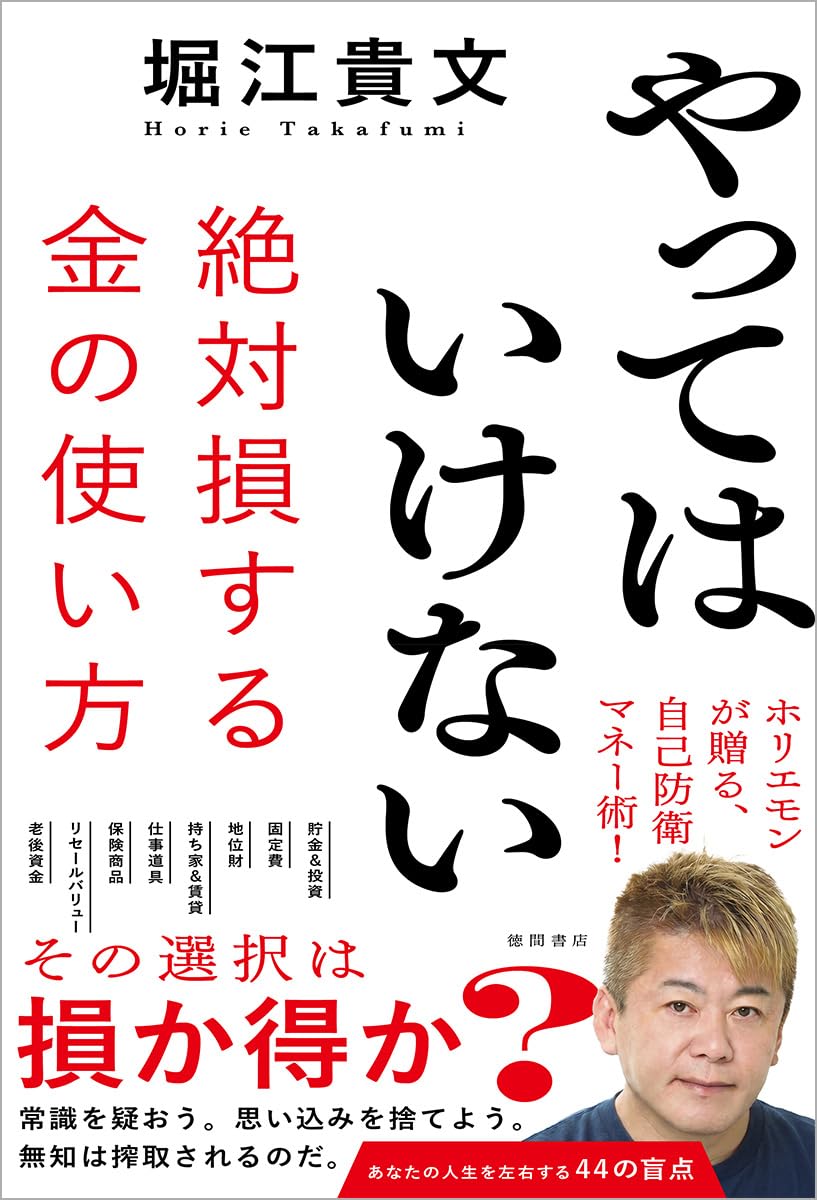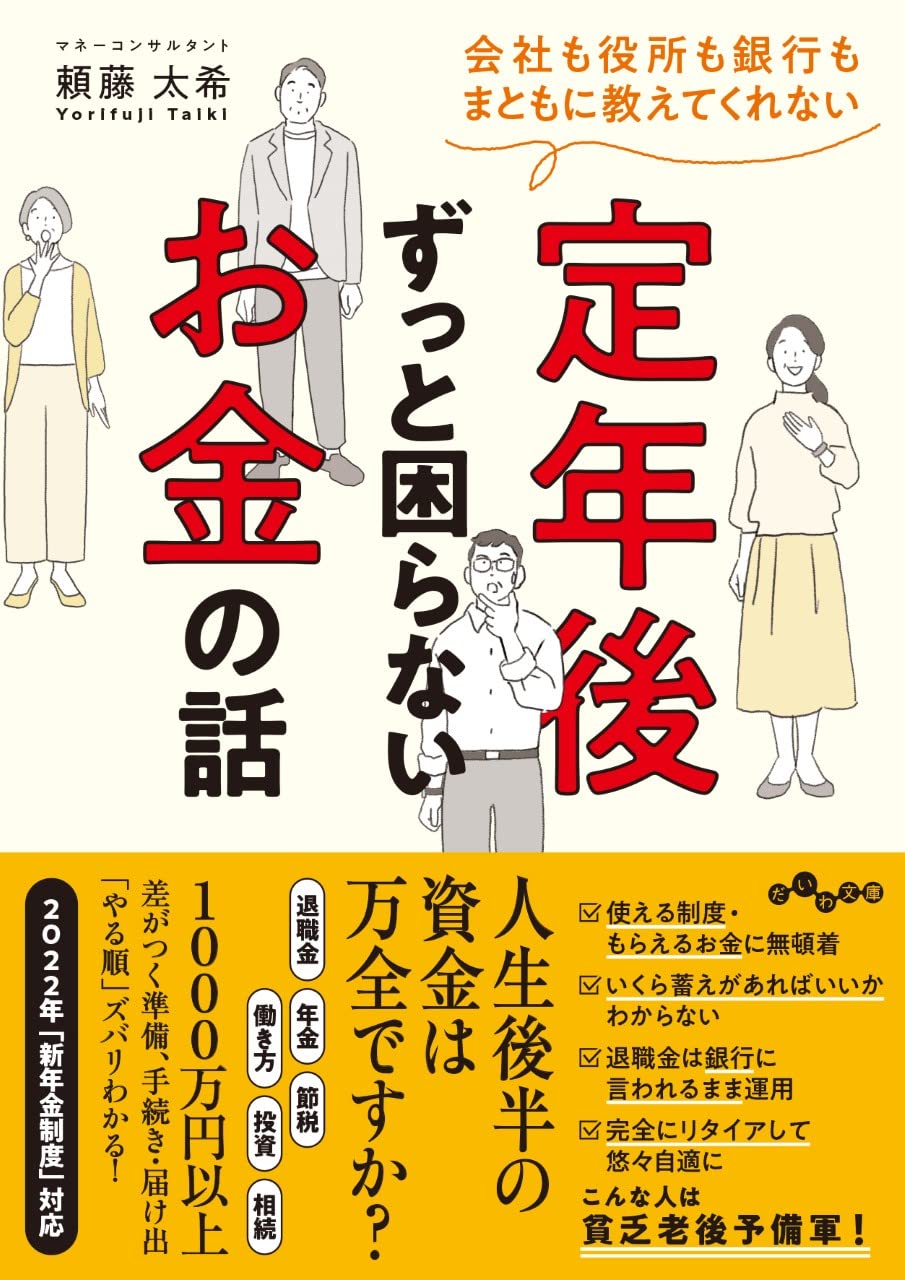
This book was unearthed while organizing the books I had finished reading, but I think it's probably a book I read around the summer of last year (2023) before I retired. After retirement, even if you have retirement benefits, you cannot avoid “money” issues for 5 years (up to age 65) until you receive a pension. I read this book and prepared it properly, but now that more than half a year has passed since I retired, I thought I'd reread it again.
Below are the points I was concerned about.
・Access to Nenkin Net is smooth if you use the “access key” described on the Nenkin regular service, and the expiration date is 3 months, so if you register with “no access key:” after that, you will receive an ID by mail at a later date, and you can log in (p30)
・There are 3 times in life to save money: 1) until you become a member of society and get married, 2) from marriage until your child is in elementary and middle school, and 3) from when your child becomes independent until retirement (p41)
・There are “unemployment benefits” as benefits that people with employment insurance can receive after retirement, and there are 4 main types of “job seeker benefits,” “employment promotion benefits,” “education and training benefits,” and “continuous employment benefits” (p52) How to pay residence tax after retirement differs depending on when they retire (p80)
・What is required for Hello Work procedures is an employment insurance certificate and a separation slip, and a separation slip is received from the company about 10 days after retirement (p91)
・When pension is advanced or deferred, the break-even point is 11.7% of people who chose “80 years old” (p101) advance in the case of 60 years old, and “81 years old or older” (p101) in the case of 70 years old, and 1.6% for deferment (p169) (p169)
・Corporate pensions include defined benefit corporate pensions (DB), welfare pension funds, and enterprise defined contribution pension (DC) systems, and which corporate pension is available differs depending on the company (p130)
・If it becomes an individual business type, a blue return is recommended, and 1) as a tax savings advantage, you can further receive a “blue return special deduction” of up to 650,000 yen from income after deducting necessary expenses, if you make a book in the form of double-entry bookkeeping, and file a final return electronically with e-tax or in a form where electronic books are stored within the deadline for filing the final return, 650,000 yen can be deducted (p157) 2) you can carry over the deficit for 3 years with carryforward deduction for losses, 3) you can pay salaries to your family 4 ) If it's up to 300,000 yen, it can be converted into a lump-sum expense (p159)
・Health insurance after retirement will continue voluntarily for the first year; in particular, people with high salaries during active duty can reduce insurance premiums, and consider whether to switch to national health insurance in the second year (p206)
・As for hometown tax, if you donate to a municipality of your choice and complete the procedure, you can deduct (donation deduct) amounts over 2000 yen from income tax or residence tax (p222)
・You can receive an old age pension when you turn 65, a “pension claim” and “old age pension notice” come to your home 3 months before the age of 65, and submit the necessary documents attached after your 65th birthday (p227)
・When you cut down your own assets (e.g. 20 million yen), first revoke at a fixed rate of 6% per year, and then revoke 600,000 yen per year when your assets are less than 10 million yen (p238)
・Inheritance tax is exempt if the amount is up to “3000+600x the number of legal heirs,” and spouses are tax-free up to 160 million yen (p190). If the inheritance tax filing deadline is up to 1.1 million yen (calendar year taxation) within 10 months (p192) of the start of inheritance, gift tax is not applied, however, when the person giving within 3 years from the date the gift is received and inheritance begins, there is a rule that inheritance tax is applied to that property (p193)
・Use a tool called a time bucket to “visualize” where and what you do in your life, divide it by 3, 5, and 10 years, and enter what you want to do into that interval (bucket of time = time bucket). If you think about time, health, and money as axes, things you can do when you have free time, things you can only enjoy because you are healthy, and things that can only be realized because you have money are different (p302)
2023/7/23 reading (estimated)