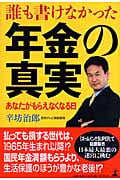
・The pension system in Japan began in Meiji 8, postal savings accounts and surnames were granted to all citizens in this year, the abolition order was in Meiji 9, and those eligible for a pension were army soldiers (p67)
・In an interview when the welfare pension system was established in Showa 17, it was stated that “if you can't pay in the future, you can make it a levy type,” and at first it was a reserve type (cover your pension with your own premium) (p78)
・The name in Showa 17 was workers' pension insurance, in 19 it was changed to the name welfare pension insurance, and welfare pensions were used to collect expenses to carry out the war (p79)
・The system created to give benefits to farmers after the war is the national pension system (p80) that began in Showa 36
・Since non-payment is basically impossible for welfare pensions and mutual aid pensions, the overall national pension unpaid rate is a much lower number (p80)
・The total premium amount for people who continued to pay for 40 years from Showa 36 (1961) to 2000 is about 2 million yen, and 800,000 yen per year is paid until death (p85)
・After Showa 61 (1986), compulsory enrollment was made from the national pension from age 20, and compulsory enrollment for students began in 1991 (p98)
・The current basic pension is only 66,000 yen per month even if it is full, but from fiscal 2010 onwards, half is covered by tax, so it's definitely advantageous, and if you don't pay this, you won't be able to receive a disability pension/survivor's pension (p104)
・If a regular office worker works together as a married couple, the monthly welfare pension is 230,000 to 340,000 yen (p116)
・According to the Ministry of Health, Labor, and Welfare's estimation of the 2004 reform, it is assumed that the average wage of a 45-year-old person as of 2004 was 470,000 yen, and the pension amount was 240,000 yen (p125)
・At age 40 (born in 1965) in 2005, the benefit amount is 59 million yen (2.7 times) compared to the premium of 22 million yen, the estimated calculation that the benefit amount is 59 million yen (2.7 times) if you live to the average life expectancy, 2.3 times even at age 0; this does not include corporate burdens (p129, 219)
・However, the premise of the trial calculation is that the wage increase rate is 4.1% in 2011, interest rates are 4.4%, and the 100-year boom will continue as it is (p131)
・The current pension reserve is 200 trillion yen, and it is thought that it can be held for about 30 years (p146)
・Macro slide determines the amount of increase by deducting 0.9% from the statistical rate of increase when prices rise (p148)
・When the basic pension number system started in 1997, 300 million pension records managed by the Social Insurance Agency, and 100 million cases enrolled as of January 1997 (payment generation: 702 million, payment generation: 30.65 million, payment generation: 30.65 million) were granted basic pension numbers (p153)
・Since 150 million cases out of 200 million cases were consolidated over 10 years from 1997, the remainder became 50 million cases (p156)
・22.15 million cases are under 60 years old, and there is no need to worry; it should be resolved when pension enrollment records are notified during 2008, but if parents enroll in the national pension from 1991 to 1997, there is a possibility that it will be a problem because a different pension number will be paid when the child gets a job at a company (p159)