
・When gas lamps were invented and the city began to be brightly illuminated, the night changed to a romantic time zone. The word serenade refers to music that plays love under the room where the lover lives last night. Night was a time to express love instead of being frightened by unknown things (p5)
・Gaslighting first appeared in London in the early 1800s, and although it may seem surprising, people have spent the night with torches, candles, and oil lamps for thousands of years until then. What boosted the spread of Gusto was the industrial revolution that occurred at our store in England. In order to increase productivity, it is necessary to run machines at night, and brighter artificial lighting is now required (p13)
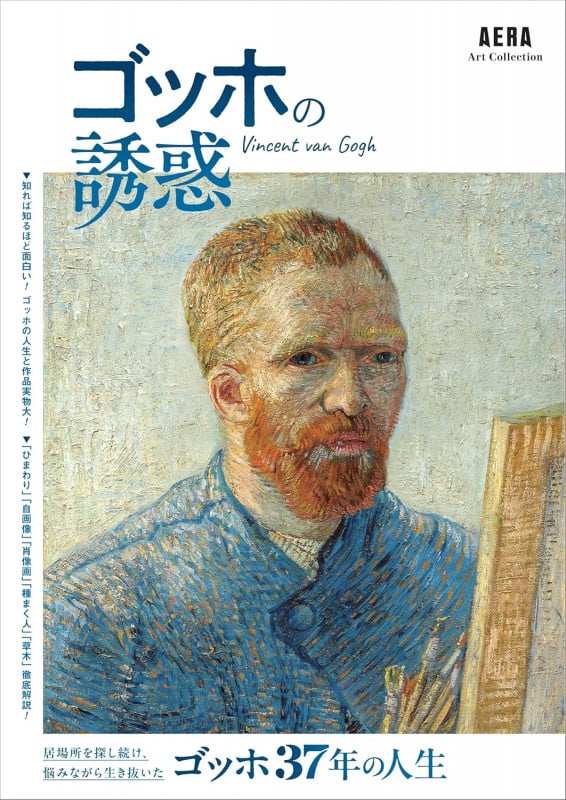
・Van Gogh left about 2000 works in his 10-year painting business, but only one was sold during his lifetime. He himself ended his life at age 37 on 1890/7/29, when the Constitution of the Empire of Japan came into effect (p21)
・ When I went to Paris at age 32, I studied cutting-edge Impressionist and Neo-Impressionist works at the time. The canvas became dramatically brighter, and pointillism was also tried. He also touched on many Ukiyo-e prints and incorporated bold compositions and colors. When he moved to Arles in southern France at age 34, he created masterpieces one after another, such as Sunflowers, Arles drawbridge, and cafe terrace at night (p30)
・Famous painters who also appear in textbooks such as Da Vinci, Bruegel, Vermeer, and Rembrandt were not able to “freely draw what they wanted to draw”; first, they wouldn't pick up a brush without orders from people such as the court, aristocrats, churches, and a small number of wealthy upper class citizens, and no matter how confident they were about their work, it was until then (p32) Modern painters ordered by patrons It was released, and it became possible to carry out search activities based on one's own sensitivities and ideas. As a cost, I had to be prepared for economic instability and poverty, and furthermore, I was confronted with the loneliness of continuing to write even though my work was not understood. One typical person is Van Gogh (p33)
・In order to succeed as a painter at the time, it was essential to be selected for a competition called the “Official Exhibition” hosted by the French Royal Academy of Fine Arts. If you win the “Rome Award” established by the Academy, you can study in Rome at national expense, and you also have a patron to buy pictures after returning home. At first glance, it seemed ideal, but it was difficult to express freely because there were mountains of traditional painting techniques, from the way our colors were painted to the composition, which also had the drawback of being extremely authoritarian. Among them, what should be noted is that “historical paintings,” that is, pictures based on mythology or the Bible were at the top, and works depicting landscapes, still life paintings, and everyday life were treated as “vulgar” (p35)
・Van Gogh was influenced by the vivid colors of Ukiyo-e, free composition not bound by perspective, capturing color as a surface, freedom from unique colors, composition not bound by perspective, bold trimmings, etc. (p47)
・Perhaps one of Van Gogh's feats was freeing the background of his portraits from black. Originally, it was common for portraits to paint the background black and add ornaments and props showing the person's position or occupation (p78)